A 38-year-old recreational runner came to VARDĀN after several months of recurring pain around his Achilles tendon. He was training for a half marathon and running four days a week.
At first, the discomfort appeared only after longer runs. He reduced his mileage, stretched his calves, and rested for a few days. The pain improved, so he started running again.
Within two weeks, it returned.
This time, he also noticed stiffness during his first few steps in the morning and discomfort when running uphill. He assumed his Achilles tendon simply needed more rest.
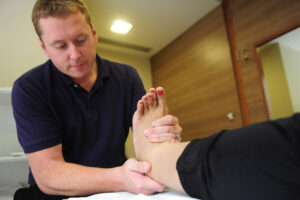
His Functional Manual Therapy® assessment showed a broader movement problem. His ankle mobility was restricted, one calf was taking more load than the other, and his control during single-leg loading was reduced. When he ran, his body was repeatedly placing more demand on the Achilles tendon than it could comfortably manage.
The focus was therefore not only on the painful tendon. It was on restoring ankle mobility, improving lower-limb control, and gradually rebuilding the tendon’s capacity to tolerate running load.
This distinction matters. Achilles pain in athletes is often not simply about how much you train. It is also about how your body manages that training.
What Research Has Been Saying
Achilles tendinopathy is a common overuse problem among runners and athletes involved in sports that require repeated running and jumping.
Research increasingly supports progressive loading as an important part of Achilles tendinopathy rehabilitation. Studies also highlight the importance of understanding factors such as training load, calf capacity, ankle function, and movement mechanics.
Complete rest alone is usually not the long-term answer.
The tendon needs appropriate loading to build capacity. At the same time, the rest of the movement system needs enough mobility and control to distribute that load efficiently.
The Common Misconception
A common assumption is:
“My Achilles hurts because I am training too much.”
Training load can certainly contribute, especially after sudden increases in running distance, speed, hills, or jumping.
But volume is only one part of the picture.
Two athletes can follow similar training programmes and respond very differently because their bodies manage load differently.
If ankle mobility is restricted, calf capacity is reduced, or single-leg control is poor, the Achilles tendon may experience greater demand with every step.
Simply resting until the pain settles does not necessarily change these factors.
What the Problem Actually Is
The Achilles tendon connects the calf muscles to the heel bone.
It plays an important role in storing and releasing energy when you walk, run, jump, and change direction.
During running, the tendon repeatedly absorbs and transfers significant forces.
Problems can develop when the load being placed on the tendon repeatedly exceeds its current capacity to manage that load.
This may happen because training has increased too quickly. It may also happen because the body is not distributing force efficiently.
The important question is not only how much load the tendon receives.
It is how well the entire body manages that load.
How It Actually Works
Efficient athletic movement depends on three important factors.
Load
The Achilles tendon needs enough capacity to tolerate the demands of your sport. A sudden increase in running distance, sprinting, jumping, or hill training can increase tendon demand faster than the body can adapt.
Mobility
Adequate ankle movement allows the lower limb to move efficiently over the foot. When ankle mobility is restricted, the body may compensate through the foot, knee, hip, or opposite leg.
Control
Running and jumping require repeated single-leg control. The foot, ankle, knee, hip, pelvis, and trunk need to work together to absorb and transfer force. If this control is reduced, the Achilles tendon may be asked to manage more load than necessary.
Why This Matters for Athletic Performance
Athletes often continue training through early Achilles symptoms because the pain initially feels manageable.
Over time, they may begin changing the way they run or jump.
They may push harder through the opposite leg, shorten their stride, avoid explosive movements, or reduce speed.
These compensations can affect both performance and movement efficiency.
For a runner, this may mean slower times or difficulty maintaining training volume.
For badminton, tennis, football, or basketball players, it may affect acceleration, jumping, landing, and rapid changes of direction.
Managing Achilles pain is therefore about more than reducing discomfort. It is about restoring the movement capacity needed for sport.
Signs Your Achilles May Need Attention
Look for patterns such as:
- Pain or stiffness around the Achilles tendon after training
- Morning stiffness around the heel or tendon
- Discomfort during the first few minutes of running
- Pain during hill running or sprinting
- Reduced confidence while jumping or pushing off
- One calf feeling weaker or tighter than the other
- Symptoms returning whenever training intensity increases
Persistent pain should be properly assessed rather than repeatedly trained through.
What Restoring Function Actually Requires
1. Restore Mobility
The foot, ankle, calf, knee, hip, and surrounding tissues need enough mobility to allow efficient movement. If restrictions are present, they should be addressed so the body has better options for distributing load.
2. Retrain Control
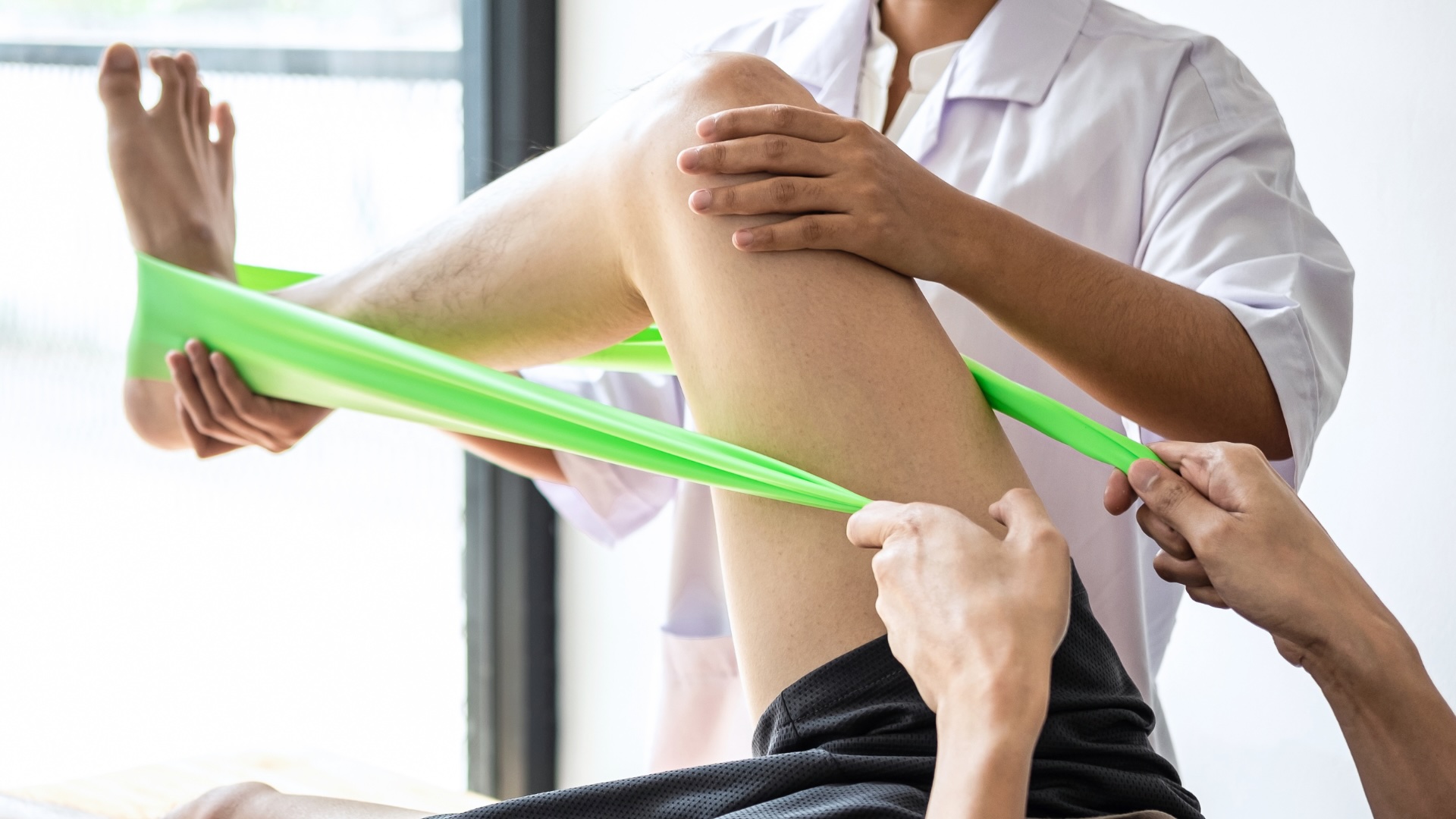
The next step is improving balance, single-leg control, weight transfer, and neuromuscular coordination. The objective is to help the entire lower limb manage force rather than relying excessively on the Achilles tendon.
3. Build Tendon Capacity
The tendon must gradually become capable of handling the demands of running, jumping, and sport. Loading is progressed according to symptoms, movement quality, and athletic requirements rather than simply returning immediately to previous training levels.
The Role of FMT™
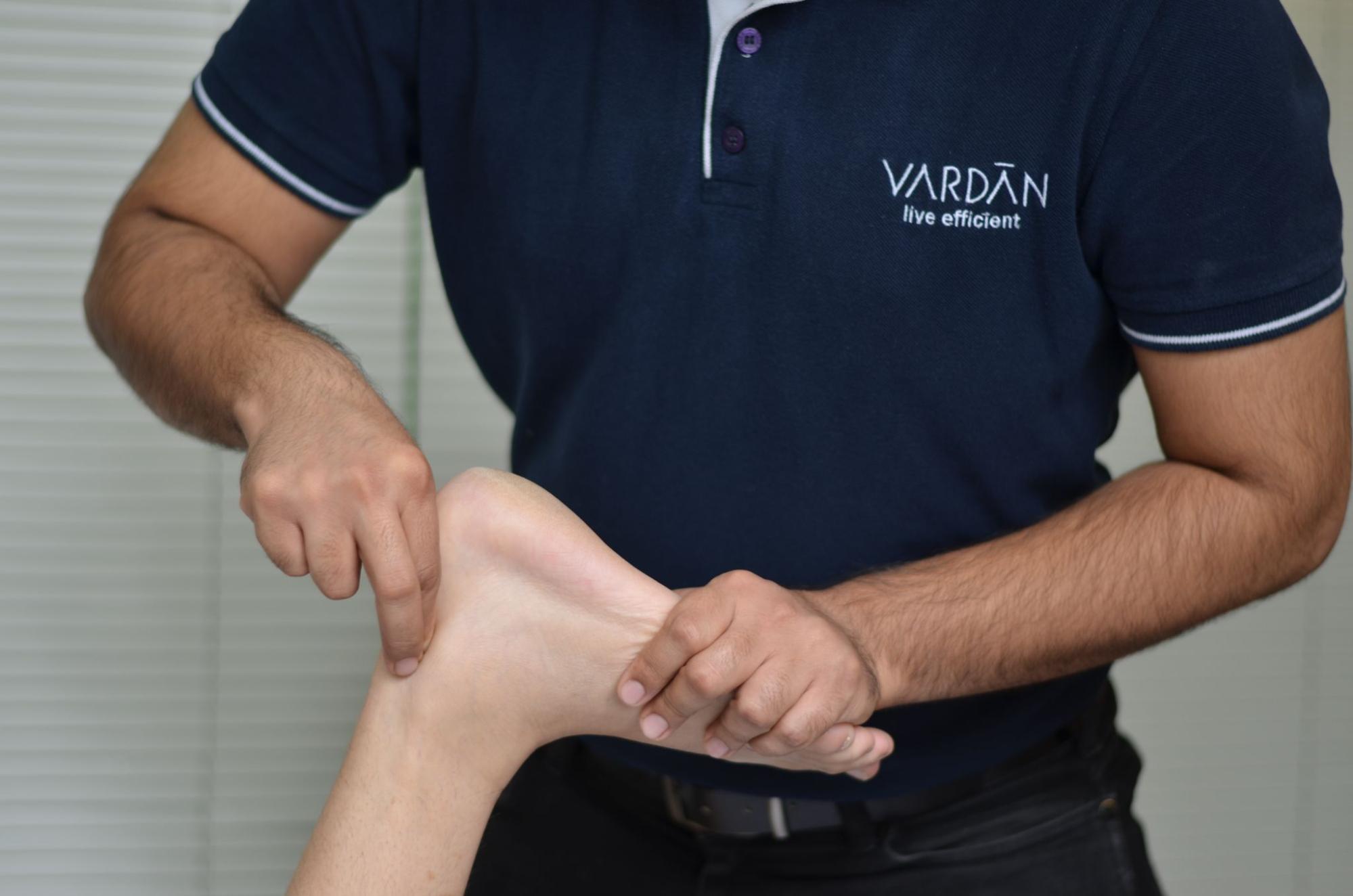
Functional Manual Therapy® looks beyond the painful tendon.
The assessment examines mobility through the foot, ankle, knee, hip, pelvis, and trunk. It also looks at how these areas work together during functional movement.
FMT™ helps address joint and soft tissue restrictions that may be affecting movement efficiency.
Once mobility improves, the focus shifts towards integrating that movement into activities such as walking, running, single-leg loading, and sport-specific tasks.
The aim is to improve how the body manages load rather than focusing only on the site of pain.
The Role of CoreFirst®
The Achilles tendon may be at the bottom of the body, but efficient lower-limb movement still depends on trunk control.
CoreFirst® focuses on posture, breathing mechanics, alignment, and Automatic Core Engagement.
Better trunk and pelvic control can help the lower limbs manage weight transfer and force more efficiently during running, jumping, and changes of direction.
This creates a stronger foundation for progressing athletic load.
Fast Reference: What You Feel and What It Could Mean
| What you experience | What may be happening | Initial focus at VARDĀN |
|---|---|---|
| Achilles stiffness in the morning | Tendon sensitivity to load | Assess tendon capacity and movement |
| Pain after longer runs | Current load exceeds capacity | Review and progress training load |
| Pain during hills or sprinting | Increased demand during push-off | Assess calf and ankle function |
| One calf feels tighter | Uneven mobility or loading | Restore lower-limb movement |
| Poor single-leg balance | Reduced neuromuscular control | Retrain stability and coordination |
| Pain returns after increasing training | Load progression is too rapid | Rebuild capacity gradually |
Two Adjustments Athletes Can Make Today
1. Avoid Sudden Changes in Training
Do not increase distance, speed, hill work, and jumping volume at the same time. Change one training variable gradually and monitor how the tendon responds during and after activity.
2. Pay Attention to the Next Morning
How the Achilles feels the morning after training can provide useful information about how it responded to the previous day’s load. If stiffness or pain consistently increases after harder sessions, the current training demand may need to be adjusted.
What Progress Can Look Like in Two Weeks
Days 1 to 4
Assess ankle mobility, calf function, single-leg control, movement mechanics, and current training load. Begin addressing relevant mobility restrictions with FMT™.
Days 5 to 10
Introduce appropriate tendon loading alongside balance, lower-limb control, and CoreFirst® strategies. Training may continue at a modified level depending on symptoms.
Days 11 to 14
Gradually progress loading and functional movements. Running or sport-specific activities can be increased when movement quality and tendon response remain appropriate.
The exact progression varies between individuals. Achilles tendon rehabilitation often requires longer than two weeks, particularly when symptoms have been present for several months.
Book an Assessment at VARDĀN
Recurring Achilles pain does not always mean you need to stop your sport.
It may mean your current training load, mobility, and movement control need to be assessed together.
A comprehensive assessment at VARDĀN looks at how your foot, ankle, lower limb, and trunk manage movement and load. The aim is to identify restrictions and compensation patterns that may be contributing to repeated tendon stress.
Request an appointment for a Functional Manual Therapy® session or a CoreFirst® Movement Assessment at VARDĀN.
Call us today at +91 011 43580720-22 / 9810306730
📅 Book your root-cause consultation at www.vardan.in
📍 Visit our advanced physiotherapy clinic in Delhi in Lajpat Nagar