What the Research Has Been Saying
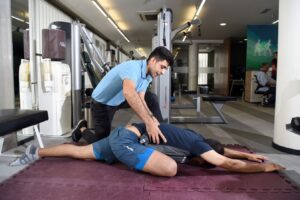
Research on workplace performance has shown that posture influences fatigue, concentration, and productivity. Studies have found that people who can maintain efficient postures and vary their positions throughout the day report less physical fatigue and better work performance.
The reason is simple. The body and brain work together.
When the body uses unnecessary effort just to stay upright, less energy is available for focus, decision-making, and sustained output.
The Common Misconception
A Case That Explains It Clearly
Ananya, 32, worked long hours in a corporate role. By mid-afternoon, she felt mentally drained. Her shoulders felt heavy, her lower back stiff, and her concentration dropped significantly.
She assumed stress and screen time were the problem.
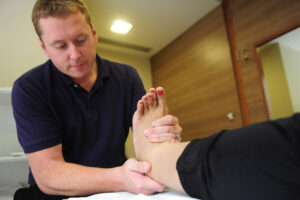
At VARDĀN, the assessment revealed something different. Her ribcage mobility was restricted, her breathing mechanics were inefficient, and her trunk was not providing adequate support during prolonged sitting.
The issue was not motivation.
The issue was how her body was managing load throughout the day.
What the Problem Actually Is
How It Actually Works
Why This Matters in Daily Life and Performance
Early Signs the Problem May Be Affecting You
- Energy crashes during the second half of the day
- Frequent neck or shoulder tightness
- Lower back fatigue after sitting
- Constant need to stretch
- Difficulty concentrating when discomfort increases
- Shallow breathing during work
- Feeling more comfortable walking than sitting
What Restoring It Actually Requires
1. Restore Mobility
Restricted movement in the spine, ribcage, pelvis, or hips limits how efficiently the body can align itself. Mobility restoration gives the body more movement options.
2. Retrain Control
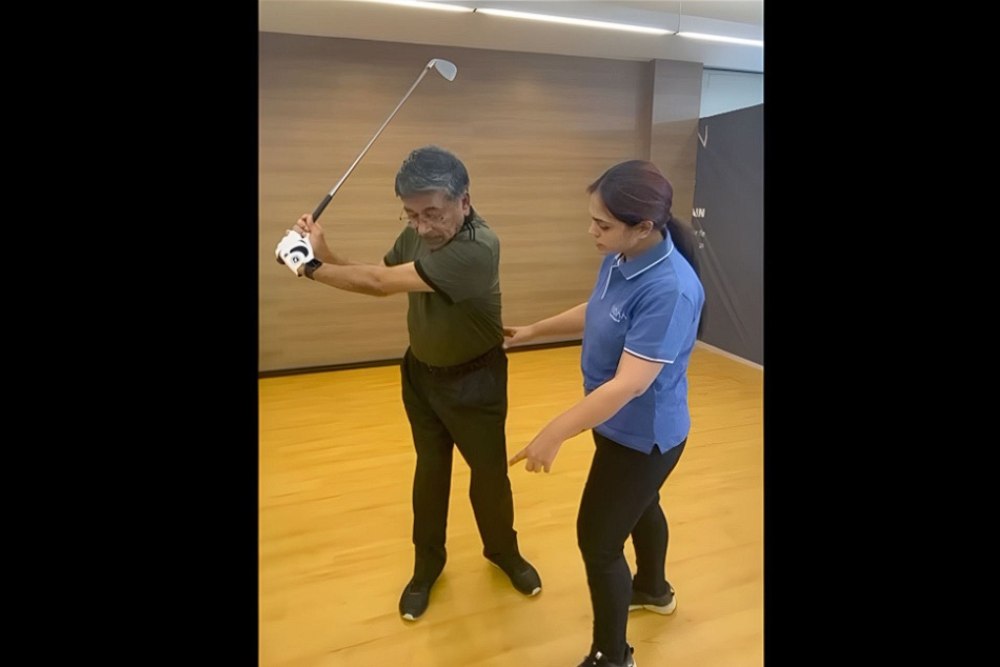
The body must relearn how to organize support before movement and load. This involves neuromuscular control, breathing mechanics, and postural control.
3. Build Capacity
Once mobility and control improve, the body develops the endurance required to maintain efficient posture throughout work, exercise, and daily life.
The Role of Functional Manual Therapy®
Functional Manual Therapy® helps identify why posture is breaking down.
The assessment looks at mobility restrictions, movement compensations, joint mechanics, and neuromuscular control.
FMT™ works to restore mobility across the spine, ribcage, pelvis, and hips while improving movement quality and reducing compensation patterns.
The goal is not to force posture.
The goal is to restore the body’s ability to find efficient posture naturally.
The Role of CoreFirst®
CoreFirst® focuses on how the body creates support before movement begins.
Through improved alignment, breathing mechanics, trunk control, and Automatic Core Engagement, the body learns to stabilize more efficiently.
Instead of consciously trying to sit straight all day, the system begins supporting itself automatically.
This makes posture easier to maintain and less physically demanding.
Fast Reference: What You Feel, What It Often Means, Initial Focus at VARDĀN
| What you experience | What it often means | Initial focus at VARDĀN |
|---|---|---|
| Neck tension after desk work | Ribcage and upper back restrictions | Mobility restoration and postural control |
| Lower back fatigue while sitting | Poor trunk support | CoreFirst® retraining |
| Shallow breathing | Ribcage stiffness | Breathing mechanics and alignment |
| Afternoon energy crashes | Compensatory muscle overuse | Movement efficiency assessment |
| Constant stretching | Temporary symptom relief | Root-cause assessment |
Two Adjustments You Can Apply Today
1. Reset Your Position Every Hour
2. Use Breathing as a Posture Check
Two Adjustments You Can Apply Today
Days 1–4
Days 5–10
Days 11–14
Book an Assessment at VARDĀN
A comprehensive assessment at VARDĀN can identify mobility restrictions, movement compensations, breathing limitations, and postural control deficits affecting your energy, focus, and performance. Request an appointment for a Functional Manual Therapy® session or a CoreFirst® Movement Assessment at VARDĀN, Lajpat Nagar, New Delhi.
Call us today at +91 011 43580720-22 / 9810306730
📅 Book your root-cause consultation at www.vardan.in
📍 Visit our advanced physiotherapy clinic in Delhi in Lajpat Nagar