You finish a workout and your lower back feels tight. You stretch it, use a foam roller, or take a day off. The tightness settles.
Then you train again, and it comes back.
This pattern is common among people who exercise regularly. The immediate assumption is usually that the lower back is tight and needs more stretching. But recurring tightness can be the body’s way of managing movement or load that is not being shared efficiently.
The question is not only, “Why is my back tight?”
A more useful question is, “Why does my back keep having to work this hard?”
What Research Has Been Saying
Research on low back pain and exercise has increasingly focused on motor control, trunk coordination, load management, and movement patterns rather than muscle strength alone.
Studies have found altered trunk muscle activation and movement strategies in people with recurrent low back pain. Research also suggests that fatigue can change lumbopelvic control during physical activity, potentially increasing the demand placed on the lumbar region.
This helps explain why someone can be strong, train regularly, and still experience recurring lower back tightness.
The issue may not be a lack of strength. It may be how mobility, stability, and muscular control work together when the body is under load.
The Common Misconception
“My lower back feels tight, so I need to stretch it more.”
Stretching may provide temporary relief. However, if the lower back is compensating for restricted hips, limited thoracic mobility, poor trunk control, or inefficient lifting mechanics, stretching the back does not address why it became tight.
The tightness may simply return the next time you train.

A Pattern We Commonly See
Consider someone who trains four or five times a week and has good overall strength.
Squats and deadlifts feel comfortable at lighter loads. As the weight increases, the lower back begins to tighten. By the end of the session, it feels fatigued. The next morning, stiffness is noticeable again.
A movement assessment may reveal that the hips are not contributing enough during the lift or that the trunk is losing control as the load increases.
The lower back then has to do more work to complete the movement.
In this situation, repeatedly treating the tight area alone misses the larger movement problem.
What the Problem Actually Is
Your lower back is part of a larger movement system.
During a squat, deadlift, run, jump, or overhead movement, force should be distributed across the feet, ankles, hips, pelvis, trunk, and upper body.
If one area does not move or stabilize efficiently, another area has to compensate.
For example:
- Restricted hip mobility can increase movement through the lumbar spine.
- Limited thoracic mobility can make the lower back compensate during rotation or overhead work.
- Poor trunk control can reduce stability as load increases.
- Fatigue can change movement mechanics later in a training session.
The lower back may feel tight because it is repeatedly being asked to provide movement or stability that should be coming from elsewhere.
How It Actually Works
Efficient training requires three things to work together.
Mobility provides movement.
Your hips, spine, ribcage, and surrounding tissues need enough mobility to perform the exercise.
Stability controls movement.
The trunk needs to maintain appropriate control while force moves through the body.
Timing coordinates movement.
The right muscles need to activate at the right time so the body can manage load efficiently.
If mobility is restricted or stability arrives too late, the lumbar region may compensate.
This can make the back feel tight even when the back muscles themselves are not the original problem.
Why This Matters for Training and Performance
Recurring tightness can gradually change the way you train.
You may reduce your lifting load, avoid certain exercises, shorten your running distance, or repeatedly modify workouts because your back does not feel reliable.
It can also affect performance.
When the lower back is doing more work than necessary, energy is being used to compensate rather than produce efficient movement.
Better movement allows force to be transferred through the entire body instead of concentrating stress in one region.
Signs Your Back May Be Compensating
Look for patterns such as:
- Tightness that returns after every heavy training session
- Lower back fatigue before your legs during squats or deadlifts
- Difficulty maintaining form as load increases
- One hip feeling tighter than the other
- Stiffness after running or prolonged exercise
- Temporary relief from stretching or foam rolling
- Your back feeling tight during movements that should primarily involve the hips
These signs do not automatically indicate an injury. They suggest that movement quality and load distribution may need closer assessment.
What Restoring Efficient Movement Actually Requires
The first step is identifying restrictions in the hips, pelvis, spine, or ribcage.
Restoring mobility allows movement to occur where it should instead of repeatedly being borrowed from the lower back.
2. Retrain Stability and TimingOnce mobility improves, the body needs to learn how to control it.
Trunk stability, breathing mechanics, coordination, and neuromuscular timing help the body prepare for movement before external load is added.
3. Rebuild Strength Under LoadStrength is then progressed within movement patterns that are already controlled.
The objective is not simply to lift more. It is to maintain efficient mechanics as load, speed, and training demands increase.
The Role of FMT™
Functional Manual Therapy® looks beyond the area that feels tight.
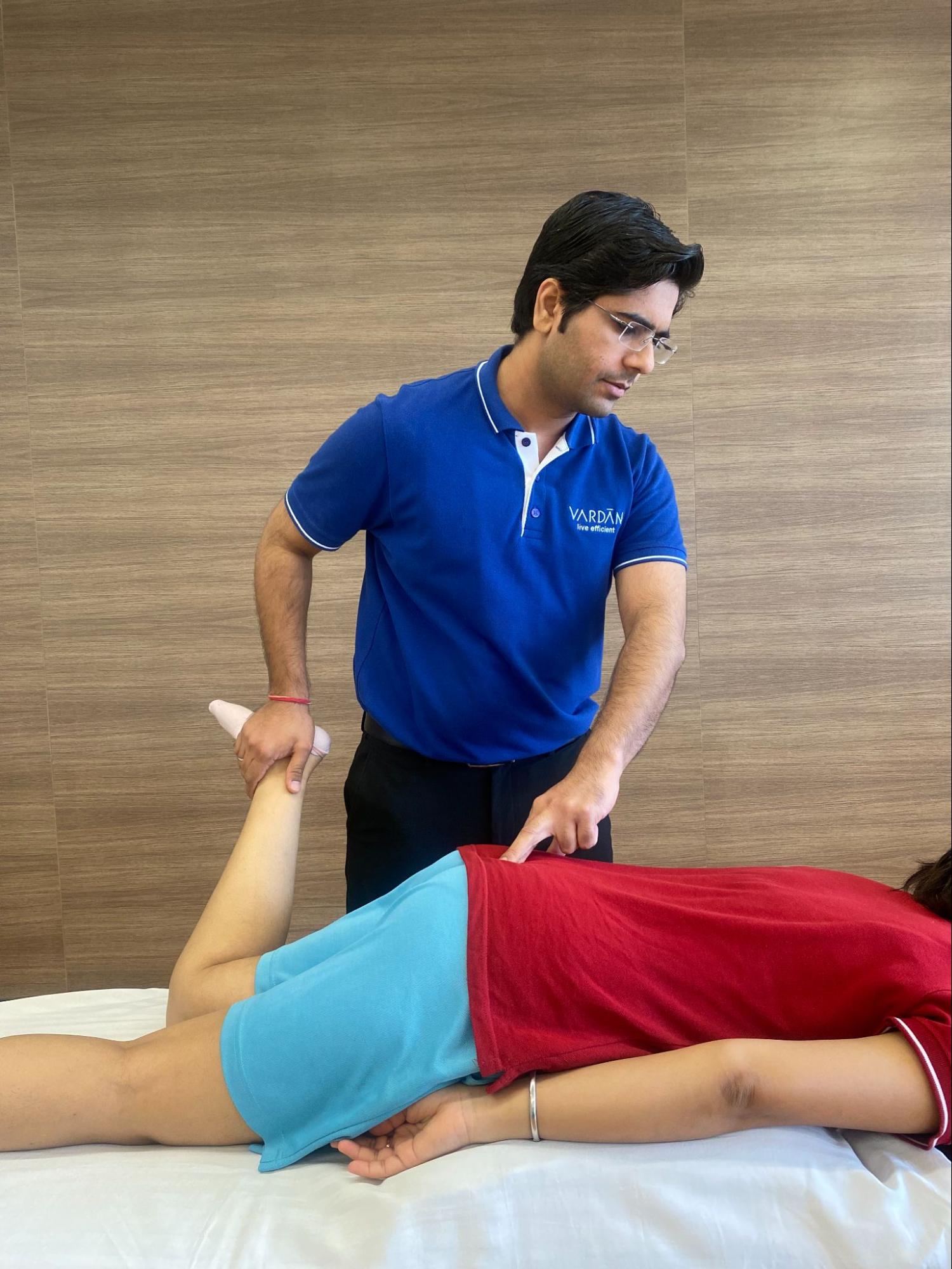
FMT™ assesses joint mobility, soft tissue restrictions, neuromuscular function, and movement patterns throughout the body to identify what may be increasing demand on the lower back.
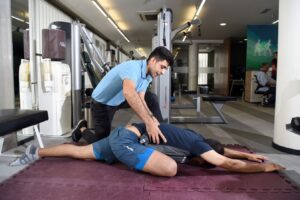
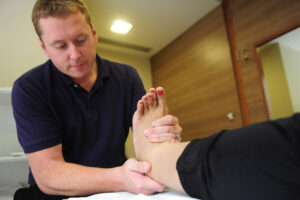
Hands-on techniques help restore mechanical mobility. Movement retraining then helps integrate that mobility into functional activities and training patterns.
The goal is to help the body distribute load more efficiently rather than repeatedly treating the same tight area.
The Role of CoreFirst®
CoreFirst® focuses on how the body prepares for and initiates movement.
Through posture, alignment, breathing mechanics, and Automatic Core Engagement, CoreFirst® helps create a stable trunk before the arms and legs generate force.
This becomes particularly important when lifting heavier weights or performing faster movements.
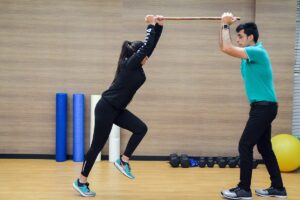
Instead of consciously bracing harder for every repetition, the objective is to develop efficient trunk control that responds automatically to movement and load.
Fast Reference: What You Feel and What It Could Mean
| What you experience | What may be happening | Initial focus at VARDĀN |
|---|---|---|
| Back tightness after heavy lifts | Lumbar region compensating under load | Assess mobility and lifting mechanics |
| Back fatigues before the legs | Inefficient trunk or hip contribution | Improve CoreFirst® strategy |
| Stretching helps only temporarily | Underlying restriction remains | Identify the source of compensation |
| Tightness during rotation | Limited hip or thoracic mobility | Restore rotational mobility |
| Symptoms increase with training load | Movement quality changes under demand | Retrain control before progressing load |
Two Adjustments You Can Apply Today
Your first few repetitions may look controlled while later repetitions change.
Pay attention to whether your back begins arching, rotating, or taking over as you fatigue. Movement quality matters as much as the weight being lifted.
2. Prepare Your Hips and Trunk Before TrainingInstead of stretching only your lower back, include gentle hip mobility, controlled trunk movement, and relaxed breathing in your warm-up.
The goal is to prepare the entire movement system for load.
What Progress Can Look Like in Two Weeks
Assess hip, pelvic, spinal, and ribcage mobility. Identify movements and training loads that reproduce the tightness. Begin addressing mechanical restrictions with FMT™.
Days 5 to 10Introduce CoreFirst® strategies for breathing, alignment, trunk control, and efficient hip-driven movement. Reintroduce training patterns at manageable loads.
Days 11 to 14Gradually increase load while monitoring movement quality, fatigue, and next-day response. Progress when the body can maintain efficient mechanics without returning to the previous compensation pattern.
Book an Assessment at VARDĀN
If lower back tightness keeps returning despite stretching, strengthening, and regular training, the problem may not be the back alone.
A comprehensive assessment at VARDĀN looks at mobility, neuromuscular control, movement patterns, and load distribution to understand why your lower back may be working harder than it should.
Request an appointment for a Functional Manual Therapy® session or a CoreFirst® Movement Assessment at VARDĀN.
Call us today at +91 011 43580720-22 / 9810306730
📅 Book your root-cause consultation at www.vardan.in
📍 Visit our advanced physiotherapy clinic in Delhi in Lajpat Nagar