More movement is not always better.
A joint that moves freely also needs control. Without strength, timing, and stability, extra mobility can become a problem instead of an advantage.
This is why someone may be flexible, able to stretch deeply, or move through large ranges, but still feel unstable, shaky, or injury-prone.
Mobility creates access.
Strength and control create safety.
What the Research Has Been Saying
Research on joint hypermobility shows why this matters. Generalized joint hypermobility is reported to affect approximately 10–30 percent of the general population. In athletes, a systematic review found that joint hypermobility was linked with about three times higher odds of shoulder injuries compared with athletes without hypermobility.
The message is not that mobility is bad.
The message is that mobility without adequate neuromuscular control, proprioception, and strength can increase instability, especially under speed, load, or fatigue.
The Common Misconception
A Case That Explains It Clearly
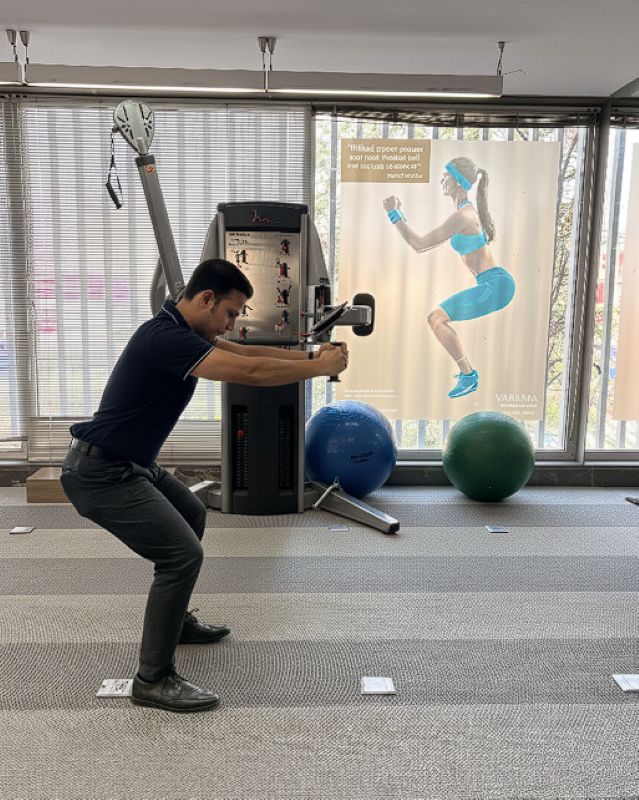
Riya, 27, had always been flexible. She could fold forward easily, sit in deep hip positions, and move her shoulders through large ranges.
But during workouts, she felt unstable. Lunges felt shaky. Overhead movements felt unpredictable. Her lower back often took over during exercises that were supposed to target the hips and legs.
At VARDĀN, the assessment showed that mobility was not the missing piece.
Control was.
Her joints had range, but her system did not have enough strength and timing to manage that range efficiently.
What the Problem Actually Is
Mobility is the ability of a joint or body region to move through range.
Stability is the ability to control that range.
Strength is the capacity to produce and resist force within that range.
When mobility improves faster than strength and control, the body enters positions it cannot manage well. This creates instability.
The joint may move, but the surrounding system may not know how to support it.
That is when compensation begins.
How It Actually Works
Every joint needs both freedom and control.
Mobility allows movement.
Strength helps manage load.
Neuromuscular control helps the right muscles switch on at the right time.
Proprioception tells the brain where the joint is in space.
When these systems work together, movement feels smooth and supported.
When mobility increases without strength, the nervous system may not trust the new range. The body may respond with tightness, guarding, shaking, or poor coordination.
This is why some people stretch regularly but still feel stiff.
The body may not be lacking range.
It may be protecting a range that it cannot control.
Why This Matters in Daily Life and Performance
Mobility without strength affects more than exercise.
It can show up when walking downhill, climbing stairs, lifting a bag, playing sport, dancing, running, or even standing for long periods.
In sport, uncontrolled mobility can reduce force transfer. The body leaks energy instead of using it efficiently.
In daily life, it can create fatigue because muscles work harder to stabilize joints that should already feel supported.
The result is often the same.
You can move into the position.
But you cannot own the position.
Early Signs the Problem May Be Affecting You
- You are flexible but feel unstable
- Deep positions feel easy, but loaded positions feel shaky
- One side feels more controlled than the other
- You stretch often, but tightness returns
- Your joints feel loose, clicky, or unreliable
- Balance work feels harder than expected
- Pain appears when you add speed, load, or fatigue
What Restoring It Actually Requires
1. Restore Mobility
Mobility still matters. If the spine, hips, ribcage, ankles, or shoulders are restricted, the body compensates. The goal is to restore usable range, not excessive range.
2. Retrain Control
The body must learn how to stabilize before and during movement. This includes timing, proprioception, balance, breathing mechanics, and trunk control.
3. Build Capacity
Once control improves, strength is built gradually within the available range. This teaches the body to own movement under load, speed, and fatigue.
The Role of Functional Manual Therapy®
Functional Manual Therapy® helps identify whether the problem is restricted mobility, uncontrolled mobility, or poor movement strategy.
FMT™ works to restore joint glide, soft tissue mobility, and movement quality. It also helps map where compensation is occurring.
For example, a flexible hip may still lack control. A mobile shoulder may still depend on the neck for stability. A loose ankle may still need better foot and trunk integration.
The goal is not simply more range.
The goal is usable, controlled, efficient movement.
The Role of CoreFirst®
CoreFirst® helps the body organize stability before movement begins.
This is especially important when a person has good mobility but poor control.
Through alignment, breathing mechanics, trunk control, and Automatic Core Engagement, CoreFirst® teaches the body how to support movement from the centre outward.
Ribs over pelvis.
Breath supporting the trunk.
Core engagement before motion.
This allows mobility to become safer, stronger, and more useful.
Fast Reference: What You Feel, What It Often Means, Initial Focus at VARDĀN
| What you experience | What it often means | Initial focus at VARDĀN |
|---|---|---|
| Flexible but shaky movement | Mobility without control | Neuromuscular retraining |
| Stretching helps briefly | Range is not being stabilized | Build strength in usable range |
| Joints feel loose or unreliable | Poor proprioception and timing | CoreFirst® and balance control |
| Pain with load or speed | Capacity not matching mobility | Controlled strength progression |
| One side feels less stable | Asymmetric motor control | Side-to-side movement assessment |
Two Adjustments You Can Apply Today
1. Pause at the End Range
Do not bounce into your deepest stretch or movement. Pause before the end range and hold with control for three slow breaths. This teaches the body to stabilize, not just access range.
2. Add Strength to Mobility Work
After mobility work, add a simple strength task in the same range. For example, after hip mobility, practise a slow controlled lunge. Mobility should always be followed by control.
What Progress Looks Like in Two Weeks
Days 1–4
Assess mobility, strength, balance, proprioception, and movement quality. Identify whether instability is coming from restriction, excess range, or poor control.
Days 5–10
Retrain control in simple positions. Focus on breath, alignment, trunk support, and slow transitions.
Days 11–14
Add load gradually. Progress only when the movement feels controlled, symmetrical, and stable the next day.
Book an Assessment at VARDĀN
If you are flexible but feel unstable, if stretching gives only temporary relief, or if your joints feel unreliable under load, the issue may not be lack of mobility.
It may be a lack of control within that mobility.
A comprehensive assessment at VARDĀN can identify where mobility is useful, where it is uncontrolled, and what strength or neuromuscular retraining your body needs.
Request an appointment for a Functional Manual Therapy® session or a CoreFirst® Movement Assessment at VARDĀN, Lajpat Nagar, New Delhi.
Call us today at +91 011 43580720-22 / 9810306730
📅 Book your root-cause consultation at www.vardan.in
📍 Visit our advanced physiotherapy clinic in Delhi in Lajpat Nagar