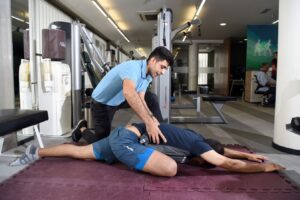
This is a common experience among people living with plantar fasciitis. Many focus only on the painful heel, while the underlying movement pattern remains unchanged.
What the Research Has Been Saying
This means the painful area is only one part of the problem. The way the entire lower limb moves often plays an equally important role.
The Common Misconception
A Case That Explains It Clearly
Many people with plantar fasciitis walk with restricted ankle movement, reduced hip mobility, or poor weight transfer. Others have altered their walking pattern because of pain, creating new compensations throughout the body.
The foot is often responding to a problem that begins elsewhere.
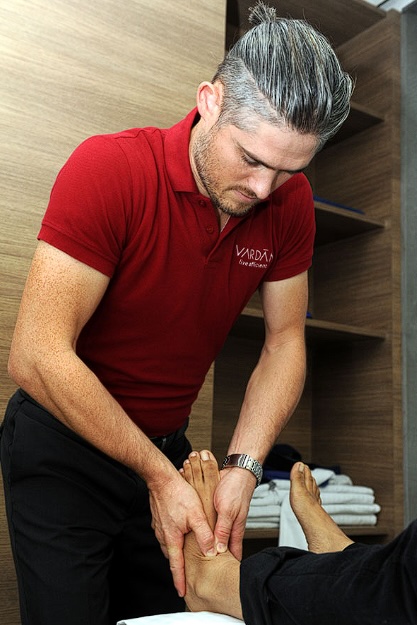
What the Problem Actually Is
How It Actually Works
Walking is a coordinated movement involving the foot, ankle, knee, hip, pelvis, and trunk.
Healthy movement requires:
- Good ankle mobility
- Efficient calf flexibility
- Stable foot mechanics
- Balanced weight transfer
- Proper trunk control
When one part of this chain stops moving efficiently, another part compensates.
A stiff ankle may increase stress on the heel.
Limited hip mobility may change walking mechanics.
Poor balance may increase loading on one foot.
The body adapts, but these adaptations often increase strain on the plantar fascia.
Why This Matters in Daily Life and Performance
Early Signs the Problem May Be Affecting You
- Sharp heel pain with the first few steps in the morning
- Pain after prolonged standing
- Heel discomfort after walking or running
- Tight calves despite regular stretching
- Reduced ankle mobility
- One foot feeling more loaded than the other
- Temporary relief that keeps returning
What Restoring It Actually Requires
The ankle, foot, calf, and surrounding joints need adequate mobility to distribute load efficiently. Restricted movement increases stress on the plantar fascia.
2. Retrain ControlThe body must relearn efficient walking mechanics, balance, and weight transfer. Better neuromuscular control helps reduce repeated overload on the foot.
3. Build CapacityOnce movement quality improves, the foot gradually develops the strength and endurance needed for everyday activities, exercise, and longer periods of standing or walking.
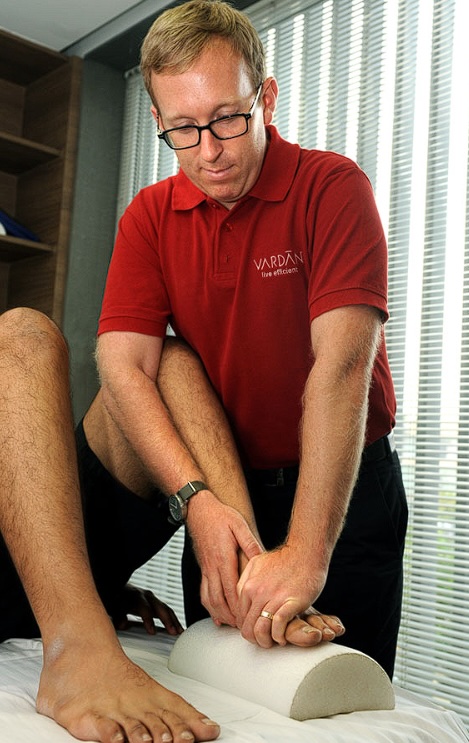
The Role of Functional Manual Therapy®
The Role of CoreFirst®
Fast Reference: What You Feel, What It Often Means, Initial Focus at VARDĀN
| What you experience | What it often means | Initial focus at VARDĀN |
|---|---|---|
| Heel pain with first steps | Excessive stress on the plantar fascia | Restore ankle and foot mobility |
| Pain after prolonged standing | Inefficient load distribution | Improve movement efficiency |
| Tight calves that keep returning | Restricted ankle mobility | Restore lower limb mobility |
| One foot feels overloaded | Altered walking mechanics | Retrain gait and balance |
| Recurring heel pain | Compensation pattern | Comprehensive movement assessment |
Two Adjustments You Can Apply Today
Before getting out of bed, gently move your ankle up and down several times. This prepares the foot and ankle for loading before your first steps.
2. Avoid Long Periods of StandingIf your work requires prolonged standing, shift your weight regularly and take short walking breaks whenever possible to reduce continuous stress on the heel.
What Progress Looks Like in Two Weeks
Assess walking mechanics, ankle mobility, foot movement, and load distribution. Begin restoring mobility and reducing compensatory movement.
Days 5 to 10Retrain walking mechanics, balance, and lower limb control while gradually improving foot loading tolerance.
Days 11 to 14Introduce longer periods of walking and functional activities while monitoring movement quality and symptom response.
Book an Assessment at VARDĀN
A comprehensive assessment at VARDĀN identifies movement restrictions, walking mechanics, and compensation patterns that may be contributing to plantar fasciitis and persistent foot pain.
Request an appointment for a Functional Manual Therapy® session or a CoreFirst® Movement Assessment at VARDĀN, Lajpat Nagar, New Delhi.
Visit vardan.in | Call +91 011 43580720-22 | Write to vardan@timesgroup.com
Call us today at +91 011 43580720-22 / 9810306730
📅 Book your root-cause consultation at www.vardan.in
📍 Visit our advanced physiotherapy clinic in Delhi in Lajpat Nagar