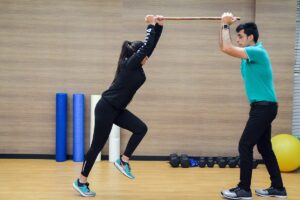
Research on functional movement interventions has also shown that improving movement quality can lower injury risk while enhancing functional performance. A 2021 systematic review reported that athletes who underwent structured functional correction training demonstrated improved movement patterns and a lower risk of sports injuries compared with control groups.
For athletes, this means that performance is not determined by strength or fitness alone. The quality of movement often determines how efficiently force is produced, transferred, and absorbed.
The Common Misconception
However, if movement efficiency is compromised, increasing training volume may place even greater stress on the body.
A Situation We Commonly See
What the Problem Actually Is
A sprint begins with force generation through the foot. A cricket delivery depends on efficient force transfer from the legs through the trunk to the bowling arm.
A tennis serve relies on coordinated movement between the hips, trunk, shoulder, and wrist.
When one link in this chain does not move efficiently, another region compensates. The athlete may continue to perform, but the body often works harder than necessary. Over time, these compensations increase fatigue, reduce performance, and raise the likelihood of injury.
How It Actually Works
Athletic performance depends on three key elements working together:
- Full joint mobility
- Efficient neuromuscular control
- Coordinated movement patterns
Restricted mobility limits force production.
Poor neuromuscular control delays muscle activation.
Inefficient movement patterns increase unnecessary loading on muscles and joints.
FMT™ evaluates the entire movement system to identify where these limitations exist and how they affect athletic performance.
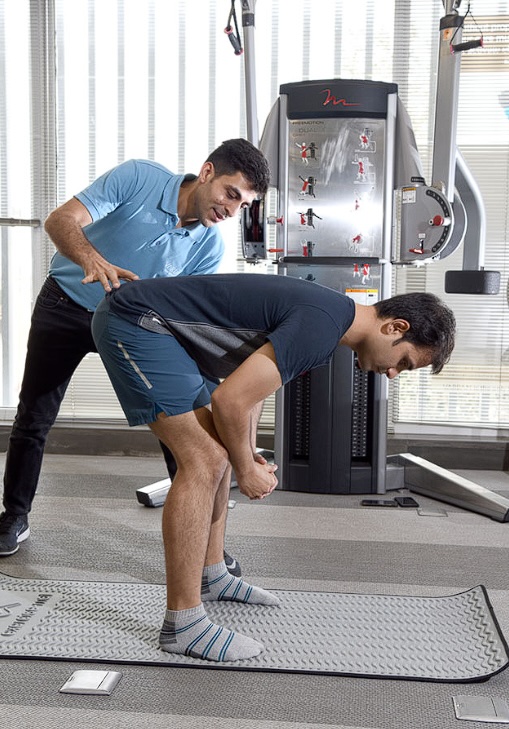
Rather than focusing only on the painful area, the assessment examines how the body functions as one integrated system.
Why This Matters in Sport
Signs Your Movement May Be Limiting Your Performance
- Recurrent muscle strains
- Frequent ankle sprains
- Shoulder discomfort during overhead sports
- Knee pain during training
- Reduced mobility despite regular stretching
- Fatigue earlier than expected during competition
- Repeated injuries on the same side of the body
What Restoring Performance Actually Requires
Efficient movement begins with joints and soft tissues moving through their full functional range. Restrictions reduce force production and alter movement mechanics.
2. Retrain Movement ControlOnce mobility improves, the body must relearn efficient coordination, balance, timing, and movement patterns specific to athletic demands.
3. Build Performance CapacityStrength, power, speed, and endurance become more effective when they are built on efficient movement rather than compensation.
The Role of Functional Manual Therapy®
The Role of CoreFirst®
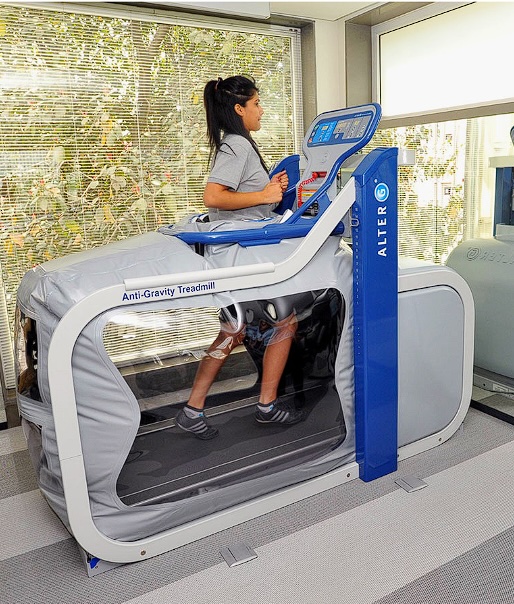
Fast Reference: Performance Limitation, Possible Movement Cause, Initial Focus at VARDĀN
| Performance challenge | Possible movement limitation | Initial focus at VARDĀN |
|---|---|---|
| Recurrent muscle strains | Reduced movement efficiency | Restore mobility and movement quality |
| Frequent ankle sprains | Poor balance and neuromuscular control | Improve stability and coordination |
| Shoulder pain in overhead sports | Restricted trunk or hip mobility | Restore whole-body movement |
| Reduced agility | Limited mobility and motor control | Improve coordinated movement |
| Performance plateau | Inefficient force transfer | Comprehensive movement assessment |
Two Practical Tips for Athletes
A slight restriction in mobility or recurring stiffness may be an early sign that the body is compensating. Addressing these changes early can help prevent future injuries.
2. Train Movement Quality Alongside StrengthStrength training is most effective when the body can move efficiently. Include mobility, balance, and movement control as part of your regular training programme.
What Progress Looks Like in Two Weeks
Assess movement quality, joint mobility, balance, and sport-specific movement patterns. Begin restoring mechanical restrictions.
Days 5 to 10Improve neuromuscular control, coordination, and movement efficiency while integrating functional athletic movements.
Days 11 to 14Progress towards higher-speed, higher-load, and sport-specific activities while monitoring movement quality and control.
Book an Assessment at VARDĀN
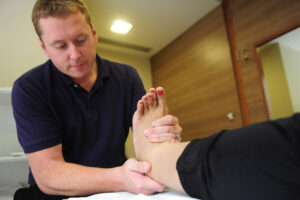
A Functional Manual Therapy® assessment at VARDĀN identifies movement restrictions, compensation patterns, and opportunities to improve efficiency before they affect performance or lead to injury.
Request an appointment for a Functional Manual Therapy® session or a CoreFirst® Movement Assessment at VARDĀN, Lajpat Nagar, New Delhi. Visit vardan.in | Call +91 011 43580720-22 | Write to vardan@timesgroup.com
Call us today at +91 011 43580720-22 / 9810306730
📅 Book your root-cause consultation at www.vardan.in
📍 Visit our advanced physiotherapy clinic in Delhi in Lajpat Nagar