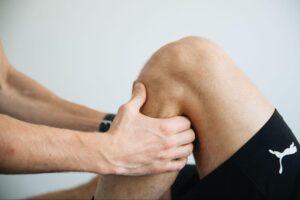
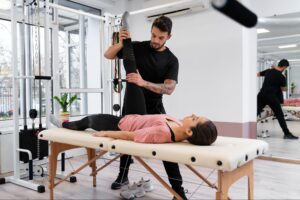
A recreational runner returns to training after recovering from a knee injury. The pain has reduced, and the knee bends comfortably. Walking and climbing stairs are no longer difficult. Yet, every time the runner attempts to increase speed, the knee begins to feel uncomfortable again.
The immediate assumption might be that the leg needs more strengthening. However, a detailed movement assessment could reveal something different. The runner may have adequate knee mobility but limited ankle movement, reduced hip control and difficulty maintaining stability when landing on one leg. These limitations can change how forces are managed during running.
In this illustrative case, strengthening the knee alone may not address every contributing factor. Rehabilitation needs to consider three connected elements: mobility, stability and strength.
Understanding how these work together is essential for restoring movement, improving physical function and supporting long-term performance.
What the Research Has Been Saying
Research in rehabilitation and sports science recognises that movement depends on several interacting physical abilities.
Mobility determines the range of movement available at a joint. Stability contributes to the body’s ability to control positions and manage external forces. Strength provides the capacity to produce force and perform physical tasks.
Studies of neuromuscular training have demonstrated that programmes combining strengthening, balance exercises and movement-control activities can improve physical function in certain populations.
Research also suggests that improving flexibility alone does not necessarily produce corresponding improvements in strength, balance or athletic performance.
This is why rehabilitation programmes often combine different forms of training rather than focusing on one physical quality in isolation. Importantly, there is no universal sequence that applies to everyone. The appropriate combination depends on the individual’s condition, goals and assessment findings.
The Common Misconception
If a muscle is strong, the movement must be efficient.
Strength is important, but it does not automatically guarantee good movement control. Someone may lift heavy weights in a gym but struggle to maintain balance while standing on one leg. Another person may be extremely flexible yet find it difficult to control their body at the end of a movement.
Similarly, having a strong core does not necessarily mean the trunk coordinates effectively with the hips and limbs during every activity. These examples illustrate why mobility, stability and strength should be assessed as related but distinct components of physical function.
A Case That Explains It Clearly
Consider another illustrative example involving an individual who regularly experiences lower back discomfort after prolonged sitting. The person performs abdominal exercises and strength training several times a week. Despite this, bending forward or lifting objects from the floor remains uncomfortable.
A movement assessment may identify three relevant findings:
- First, restricted hip mobility could make bending more difficult.
- Second, inadequate trunk control during certain movements may affect how the body manages the task.
- Third, the person may have sufficient muscle strength in isolation but difficulty applying that strength during coordinated movement.
The rehabilitation approach may therefore involve improving hip mobility, practising controlled bending and progressively strengthening the muscles required for lifting. The objective is not simply to make individual muscles stronger. It is to help the person use their available movement and physical capacity effectively.
What the Problem Actually Is
Mobility, stability and strength are often discussed separately, but everyday activities require them to work together.
- Mobility (Available movement): The usable range of motion available at a joint or across a movement pattern.
- Stability (Movement control): The ability to maintain or regain control of a position while responding to physical demands.
- Strength (Force production): Allows muscles to generate force for lifting, pushing, pulling, walking and other activities.
How They Actually Work Together
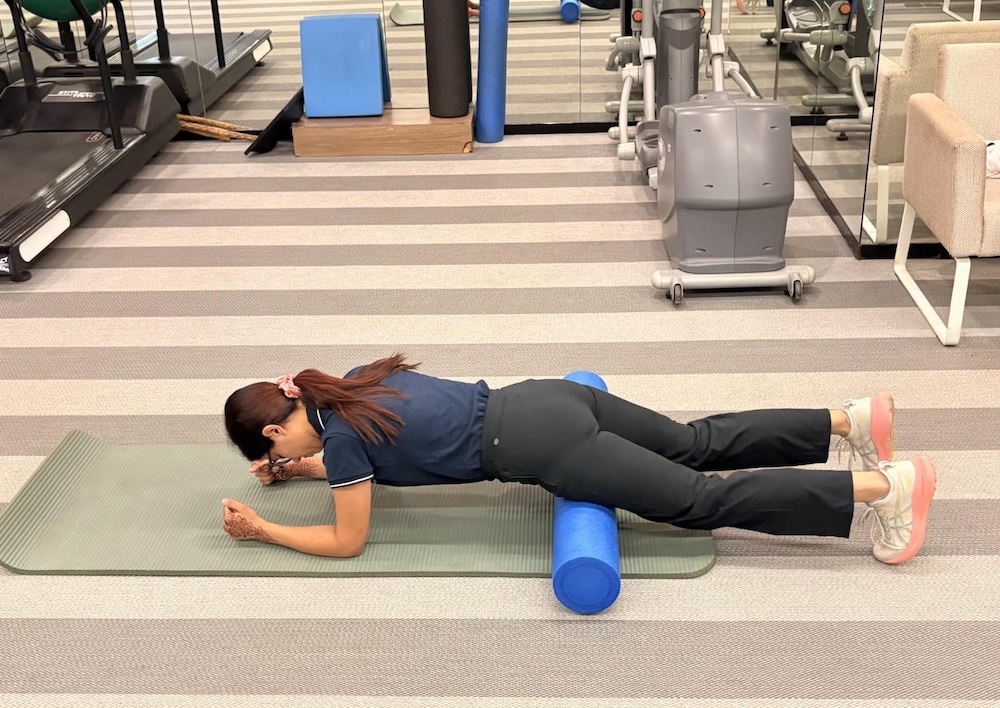
Consider the simple action of getting up from a chair. The hips, knees and ankles need sufficient mobility to allow the body to move into the required position. The trunk and lower limbs must provide stability as body weight shifts forward. The leg muscles then generate the force needed to stand. If any of these elements is significantly limited, the task may become more difficult.
The same principle applies to climbing stairs, carrying groceries, reaching overhead or performing athletic movements. A golfer, for example, needs adequate hip and trunk rotation, the ability to control body position during the swing and sufficient muscular capacity to manage repeated effort. A runner needs joint mobility, coordinated control during each stride and the strength to tolerate the demands of training.
These physical qualities interact continuously rather than functioning as separate systems.
Why This Matters in Daily Life and Performance
Understanding this relationship helps explain why two people with similar symptoms may require different rehabilitation approaches. One person experiencing knee discomfort may have restricted ankle mobility. Another may have adequate movement but reduced quadriceps strength. A third may struggle with single-leg control during demanding activities. Although the symptoms appear similar, their physical limitations may differ.
For older adults, addressing relevant mobility, balance and strength limitations can support activities such as walking, climbing stairs and getting out of a chair. For office professionals, the focus may be on restoring comfortable movement after prolonged sitting and improving tolerance for everyday physical tasks. For athletes, the goal may involve developing the physical capacity and coordination required for training and competition.
Early Signs That Something May Be Limiting Your Movement
- Difficulty squatting despite regular exercise.
- Feeling unsteady when standing on one leg.
- Stiffness while bending, twisting or reaching.
- Discomfort when lifting everyday objects.
- Reduced confidence during quick changes of direction.
- One side feeling weaker or less coordinated.
- Recurring movement difficulties after an injury.
What Restoring Efficient Movement Actually Requires
1. Restore Mobility
The first step is to identify relevant restrictions in joints and surrounding tissues. Treatment may include manual therapy, mobility exercises and movement practice.
2. Retrain Stability
Once adequate movement is available, balance training, coordinated muscle activation and varied position exercises help control it.
3. Build Strength and Capacity
Strengthening helps develop the ability to manage physical loads, progressing gradually according to symptoms and functional goals.
The Role of Functional Manual Therapy® (FMT™)
At VARDAN, Functional Manual Therapy® takes an integrated approach to assessing and addressing movement limitations. FMT™ considers how joints, muscles and surrounding tissues contribute to functional activities.
For example, when someone experiences difficulty squatting, the Functional Manual Therapy team may assess the ankles, knees, hips and trunk rather than focusing exclusively on the painful area. Hands-on techniques may be used to address relevant mobility restrictions, alongside exercises that help integrate improvements into functional movement.
The Role of CoreFirst®
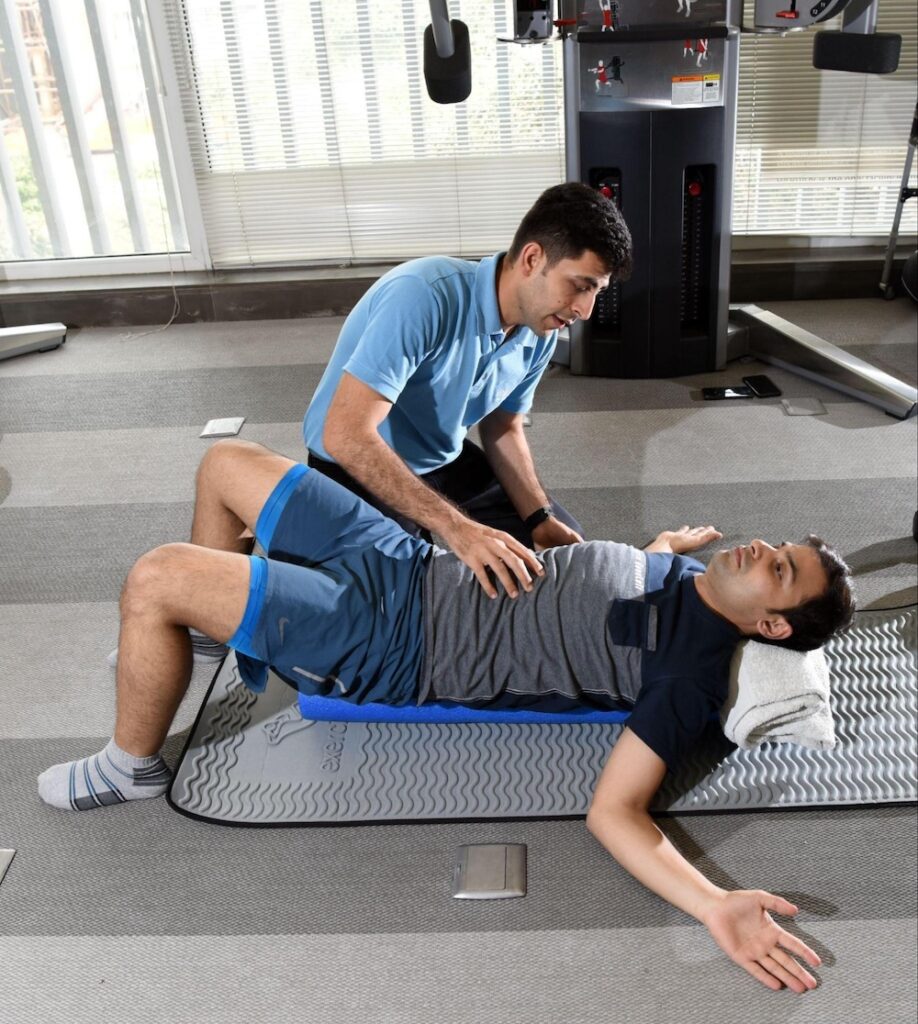
CoreFirst® focuses on how the body organises muscular support during movement. Instead of viewing core function simply as abdominal strength, it emphasises coordinated activation and trunk control during functional activities.
Lifting an object requires more than strong abdominal muscles. The body must coordinate its position, manage the load and produce the necessary force. CoreFirst® aims to develop these movement strategies so that improved control can be applied to practical activities. Together, FMT™ and CoreFirst® can help address relevant restrictions and support the development of coordinated movement.
Mobility, Stability and Strength: A Quick Reference
| What you experience | What it may indicate | Initial focus at VARDĀN |
|---|---|---|
| Difficulty bending or squatting | Limited joint mobility | Assess relevant movement restrictions |
| Feeling unsteady while walking | Balance or coordination limitations | Evaluate stability and control |
| Difficulty rising from a chair | Reduced lower-limb strength or functional capacity | Assess strength and movement strategy |
| Discomfort during lifting | Mobility, load tolerance or coordination limitations | Evaluate the complete movement |
| Difficulty returning to sport | Insufficient physical capacity for the activity | Plan progressive rehabilitation |
Two Adjustments You Can Apply Today
1. Practise Controlled Sit-to-Stand Movements: Choose a stable chair and practise standing up and sitting down slowly, without forcing the movement. Notice whether you can maintain balance and whether one leg seems to work harder than the other.
2. Include Different Types of Movement: Rather than relying exclusively on stretching or strengthening, consider a suitable combination of mobility exercises, balance activities and resistance training.
What Progress May Look Like in the First Two Weeks
Days 1–4 (Identify the Limitations): Assessment may focus on joint movement, muscle function, balance and functional activities.
Days 5–10 (Develop Control and Capacity): Treatment may combine mobility work, stability exercises and progressive strengthening, depending on tolerance.
Days 11–14 (Reassess Functional Movement): The team may review how the person performs relevant activities and adjust the rehabilitation plan accordingly.
Better Movement Requires More Than One Physical Ability
Mobility allows the body to move through the range required for an activity. Stability helps maintain control, while strength provides the force needed to complete the task. None of these qualities works entirely independently.
At VARDAN, Functional Manual Therapy® and CoreFirst® support a personalised approach to restoring functional movement and developing physical capacity.
Book a movement assessment at VARDAN to understand how your mobility, stability and strength work together.
Book an Assessment at VARDĀN
Call us today at +91 011 43580720-22 / 9810306730
📅 Book your root-cause consultation at www.vardan.in
📍 Visit our advanced physiotherapy clinic in Delhi in Lajpat Nagar