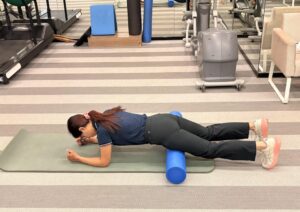
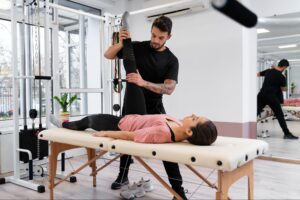
A 42-year-old recreational badminton player returns to the court three months after recovering from an ankle injury. The swelling has disappeared, the pain is minimal, and walking feels completely normal.
Yet, something is still not right.
Every time the player lunges forward or changes direction quickly, the ankle feels unstable. There is hesitation before landing, and the player has started relying more heavily on the other leg.
A movement assessment could reveal that although the injury has healed, the ankle has not regained its full functional capacity. Joint mobility may still be restricted, balance may be reduced, and the surrounding muscles may not be coordinating effectively during rapid movements.
This illustrative case highlights an important distinction: recovering from an injury and restoring normal joint function are not always the same thing.
What the Research Has Been Saying
Research on musculoskeletal rehabilitation consistently highlights the importance of restoring physical function rather than focusing exclusively on pain reduction.
Studies involving people recovering from ankle sprains have found that some individuals continue to experience instability, reduced balance and functional limitations long after the initial injury. Research on chronic ankle instability also suggests that previous injuries can be associated with changes in joint mobility, muscle activation and sensorimotor control.
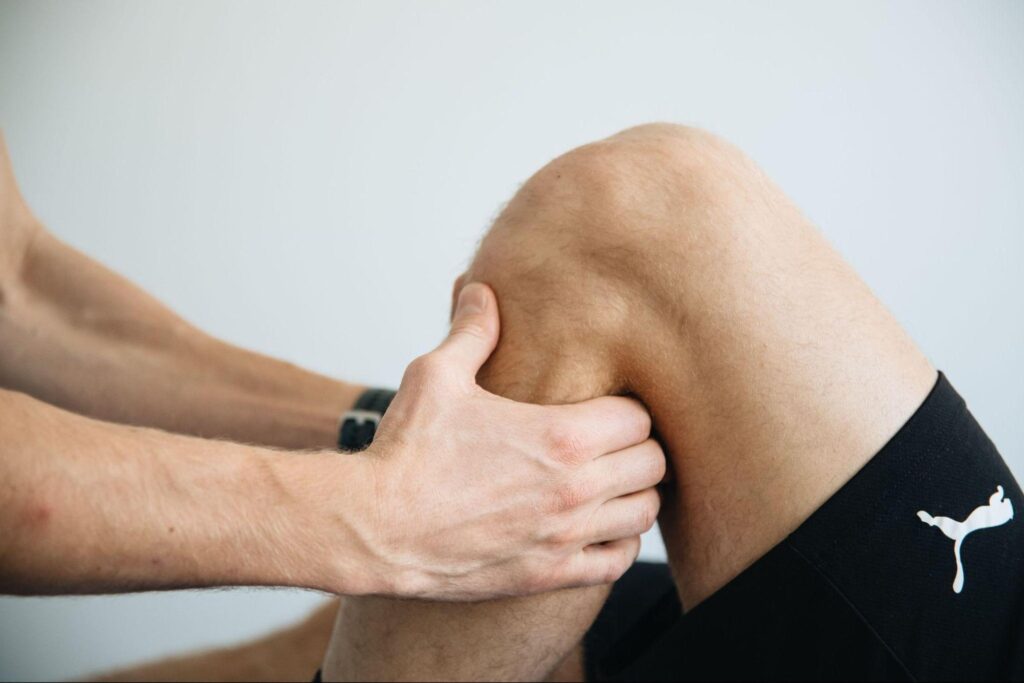
Similarly, rehabilitation research involving knee injuries and joint replacement has demonstrated the importance of progressive strengthening, functional exercises and movement training. These findings reinforce a central principle: successful recovery should be measured by what a person can do, not simply by how much pain has disappeared.
The Common Misconception
Once the pain disappears, the joint has fully recovered.
This assumption can lead people to return to normal activities before their physical function has been adequately restored. A person recovering from a knee injury may walk comfortably but struggle with stairs. Someone with a previous shoulder problem may experience little discomfort at rest but find overhead lifting difficult.
The absence of pain does not necessarily mean that joint mobility, strength and coordination have returned to their previous levels.
A Case That Explains It Clearly
Consider another illustrative example involving an office professional recovering from a shoulder injury. After several weeks of rest and treatment, the pain has reduced considerably. However, reaching behind the back, lifting a bag onto an overhead shelf and performing certain gym exercises remain difficult.
A movement assessment may identify reduced shoulder rotation, restricted upper-back mobility or limitations in how the shoulder blade moves during reaching. The individual may also have developed compensatory movement patterns to avoid discomfort. Rather than focusing only on the shoulder joint, rehabilitation may need to address the interaction between the shoulder, upper back and surrounding muscles.
What the Problem Actually Is
A joint is not simply a connection between two bones. Its function depends on several interacting structures and systems, including joint surfaces, muscles, ligaments, tendons and the nervous system.
- Mobility: The joint needs sufficient range of motion to perform the intended activity.
- Stability and Control: The body must be able to control movement and maintain joint positioning under physical demands.
- Strength and Load Tolerance: The surrounding muscles must be capable of producing and absorbing force.
How Joint Function Actually Works
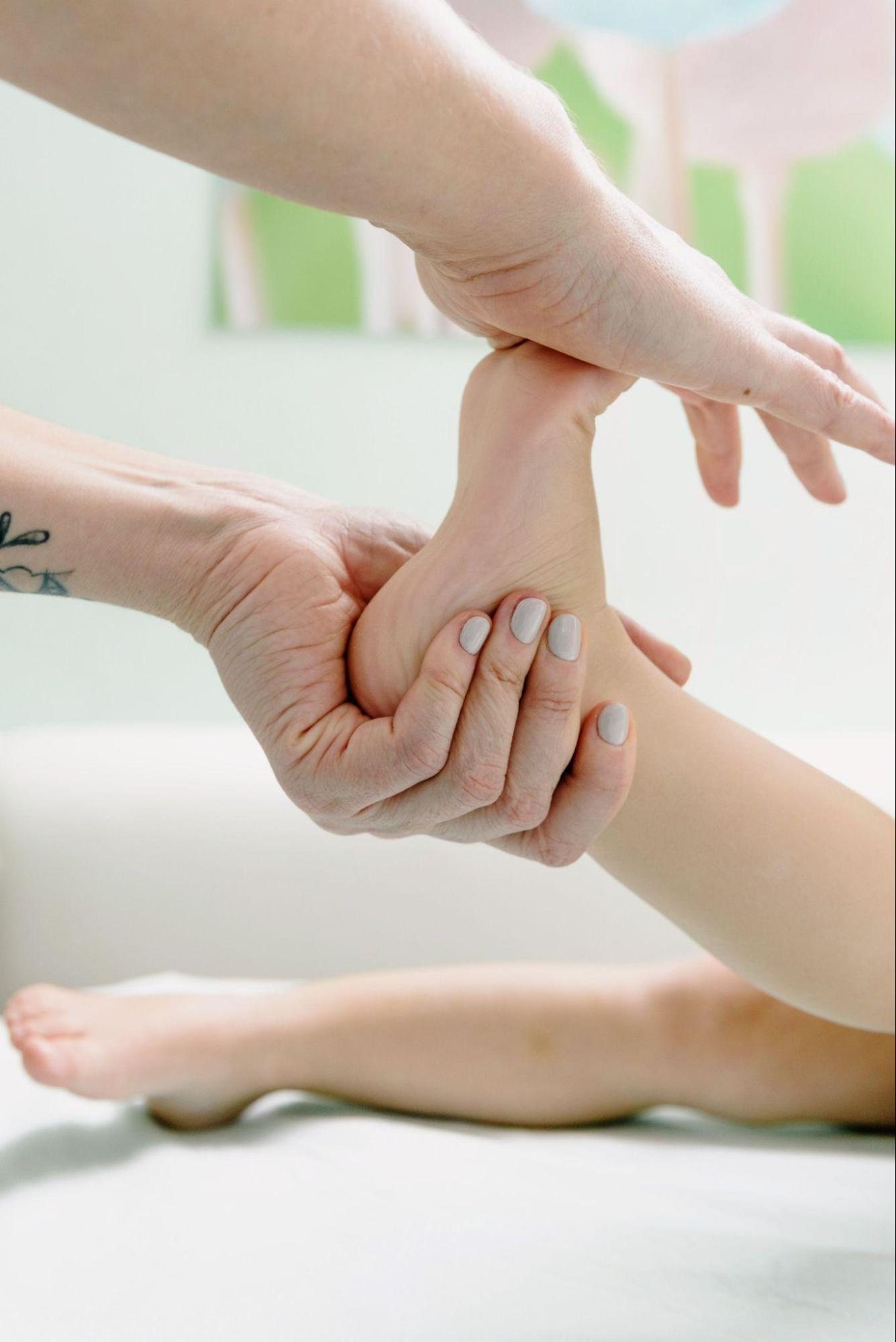
Consider the simple movement of climbing stairs. The ankle must allow the lower leg to move forward as the body shifts over the foot. The knee needs sufficient mobility to bend and straighten, while the hip contributes to lifting and supporting body weight. At the same time, the muscles generate force and the trunk helps maintain balance.
If one joint has restricted mobility or reduced control, the person may change how they perform the movement. A detailed assessment helps determine whether a particular limitation is relevant to the person’s symptoms and functional difficulties.
Why This Matters in Daily Life and Performance
Joint function influences many activities that people often take for granted. Reduced hip mobility may make sitting uncomfortable for office professionals. Knee stiffness can hinder older adults climbing stairs. Limitations in ankle control or shoulder mobility affect athletic performance and confidence.
Rehabilitation should therefore address both physical limitations and the gradual return to meaningful activities.
Early Signs That Your Joint Function May Not Be Fully Restored
- Stiffness that persists after an injury.
- Difficulty bending, squatting or reaching comfortably.
- Feeling unstable during walking or physical activity.
- Reduced confidence while using the affected limb.
- One side of the body feeling noticeably weaker.
- Discomfort returning when activity intensity increases.
- Difficulty performing tasks that were previously comfortable.
What Restoring Joint Function Actually Requires
1. Restore Mobility
Identify and treat joint restrictions using manual therapy and movement practice.
2. Retrain Stability and Control
Retrain balance, muscle activation, and movement control under varied conditions.
3. Build Strength and Physical Capacity
Develop muscular support and physical capacity for progressive functional demands.
The Role of Functional Manual Therapy® (FMT™)
At VARDAN, Functional Manual Therapy® takes an integrated approach to evaluating and addressing joint-related movement limitations. Rather than concentrating exclusively on the painful area, FMT™ considers how different joints, muscles and surrounding tissues contribute to functional movement.
Hands-on techniques address joint and soft-tissue restrictions, while functional exercises integrate improved mobility into everyday activities.
The Role of CoreFirst®
CoreFirst® focuses on coordinated muscle activation and trunk control during functional activities. Joint movements rarely occur in isolation; for example, reaching overhead requires interaction between the shoulder, shoulder blade and trunk. CoreFirst® supports efficient movement strategies across the entire body.
Joint Recovery: A Quick Reference
| What you experience | What it may indicate | Initial focus at VARDĀN |
|---|---|---|
| Ankle instability after a sprain | Reduced balance or movement control | Assess mobility and stability |
| Knee discomfort while climbing stairs | Strength or joint movement limitations | Evaluate lower-limb function |
| Difficulty reaching overhead | Shoulder or upper-back restrictions | Restore usable mobility |
| Hip stiffness after prolonged sitting | Reduced movement tolerance or hip mobility | Assess hip and trunk function |
| Discomfort when returning to sport | Insufficient strength or load tolerance | Plan progressive rehabilitation |
Two Adjustments You Can Apply Today
1. Pay Attention to Functional Movements: Notice how comfortably you perform everyday activities. If one side feels restricted, avoid forcing movement and seek assessment.
2. Avoid Returning to Full Activity Too Quickly: Gradually increase physical demands according to recovery stages. Pain relief does not mean full readiness for heavy loads.
What Progress May Look Like in the First Two Weeks
Days 1–4 (Understand the Restrictions): Assessment identifies limitations in mobility, strength, stability, and movement.
Days 5–10 (Improve Movement Control): Rehabilitation includes joint mobility work, strengthening, and coordination exercises.
Days 11–14 (Review Functional Progress): The team reassesses activities, reviews symptoms, and adjusts the programme.
Long-Term Recovery Means Restoring What Your Body Can Do
Joint recovery involves restoring the ability to move comfortably, maintain control and manage physical demands. At VARDAN, FMT™ and CoreFirst® support a personalized path to full functional recovery.
Book a movement assessment at VARDAN and take the next step towards restoring joint function and long-term recovery.
Book an Assessment at VARDĀN
Call us today at +91 011 43580720-22 / 9810306730
📅 Book your root-cause consultation at www.vardan.in
📍 Visit our advanced physiotherapy clinic in Delhi in Lajpat Nagar