A case that explains it clearly
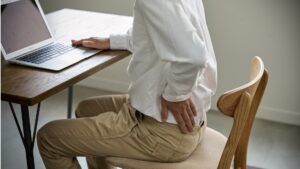
Vikram, 44, had been playing golf for fifteen years. He was not a professional, but he was serious about his game. Over the past two years, a nagging right-sided lower back pain had become a regular part of his life. It would flare after a long round, ease with rest, and return the moment he got back on the course.
He had already done the rounds. A physiotherapist had given him hip mobility exercises. A trainer had added thoracic rotation drills to his warm-up. His flexibility had genuinely improved. He could rotate further in his backswing than he ever could before. And yet the back pain kept returning, sometimes worse after a good session than a moderate one.
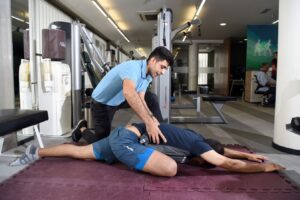
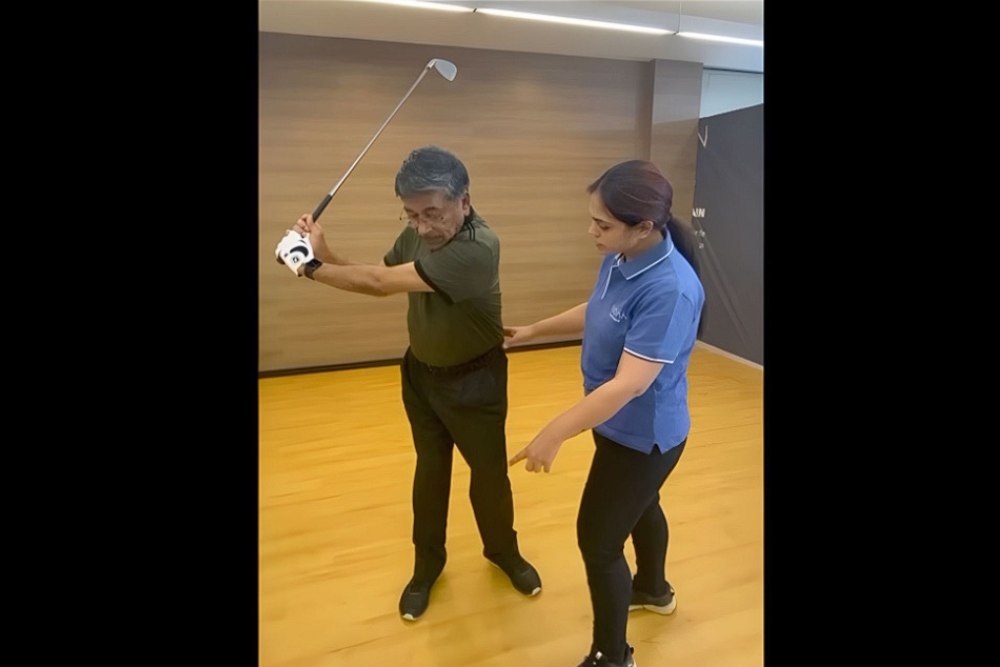
When Vikram came to VARDĀN, the assessment revealed something he had not expected. His thoracic spine and hips were moving more than they used to. But the deep stabilising muscles of his lumbar spine were not keeping pace. His lower back was absorbing rotational forces it was never designed to handle, not because it was stiff, but because nothing was controlling the movement arriving at it from above and below. He had been working hard on his mobility. Nobody had addressed his control.
The difference between mobility and control
Mobility is the ability of a joint to move through its available range. It is necessary. Without it, movement is restricted and force cannot be transferred efficiently through the body.
Control is the ability of the neuromuscular system to manage that range under load, at speed, and under fatigue. It is what makes mobility safe and useful.
The problem arises when these two things are trained separately or when mobility is developed without the neuromuscular system catching up. A joint that can move further than the muscles and stabilisers around it can manage is not more capable. It is more exposed.
Research on movement quality and injury risk consistently shows that range of motion alone is not a reliable predictor of injury prevention. What matters is whether the body can control the range it has access to.
Why golf makes this particularly visible
Golf places a specific and significant demand on the lumbar spine. A published review in PMC noted that the golf swing loads the spine with torsional, compressive, and shear forces simultaneously. Low back pain is the most commonly reported injury in golfers, affecting both amateurs and professionals.
What makes the golf swing a useful illustration of this problem is the kinetic chain. The swing depends on the thoracic spine and hips generating rotation and transferring it through the lumbar spine to the arms and club. When the thoracic spine or hips are restricted, the lumbar spine compensates by rotating more than it should. When those restrictions are released through mobility work but control is not restrained alongside, the lumbar spine now moves further than the stabilising muscles can manage. The load on the discs, facet joints, and surrounding tissue increases.
Research published in the Journal of Orthopaedic and Sports Physical Therapy found that golfers with a history of lower back pain showed deficits in spinal proprioception, meaning their ability to sense and control spinal position during movement was compromised. More range with less awareness is not an improvement. It is a recipe for repeated injury.
This is not only a problem for golfers
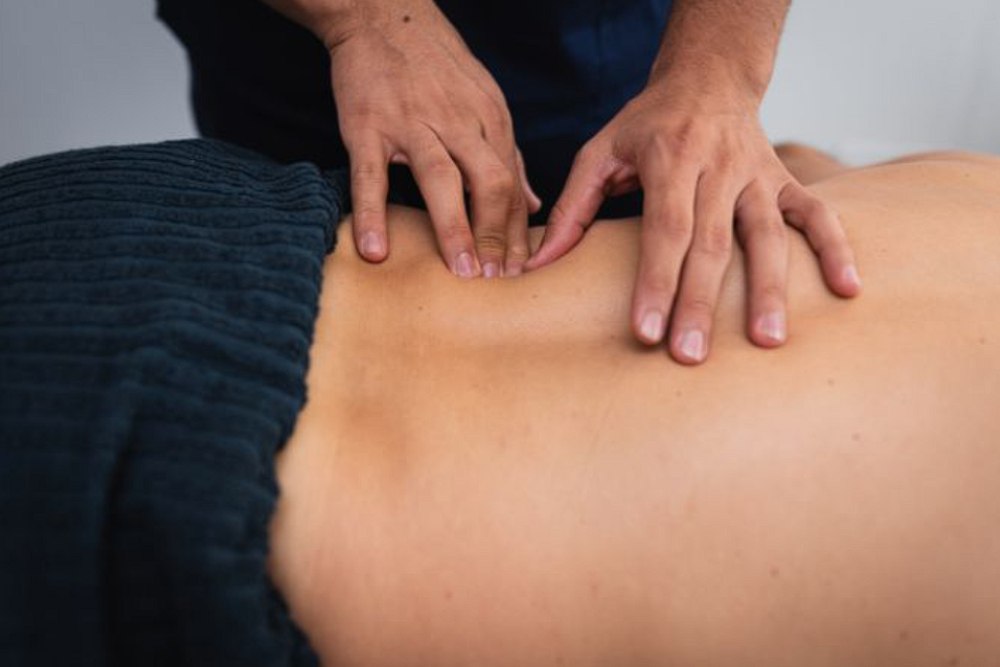
The golf swing is a clear example, but the same principle applies across every sport and in daily life.
A runner who increases hip mobility through stretching but has not retrained how the pelvis stabilises under single leg loading will shift more stress to the knee and lower back. A person who improves shoulder mobility through yoga but has not rebuilt scapular control will find their rotator cuff under more load, not less. Someone who gains lumbar range after a period of stiffness but has not re-established deep trunk stability will find their back more susceptible to loading, not less.
Mobility gives the body access to range. Control is what determines whether the body can actually use that range safely.
What hypermobility without control looks like in practice
- A joint moves freely in isolation but feels unpredictable or unstable during loaded movement
- Flexibility has improved but injury or pain continues at the same rate
- A movement feels different on each side despite similar range of motion in both
- Pain or discomfort returns specifically after activities that involve higher speed or load
- Fatigue reveals symptoms that were absent during slower, controlled practice
- The body avoids certain positions or speeds without an obvious reason
What needs to be addressed
- Identify what is restricted and what is compensating. Not all restricted joints need more mobility work. Some joints are stiff because adjacent joints lack control, and the nervous system is protecting them. Restoring mobility without understanding this can increase load rather than reduce it.
- Restore joint glide where it is genuinely restricted Where true restriction exists, mobility must be addressed. But this needs to be specific and sequenced. Releasing a joint without simultaneously beginning to retrain how the body uses that new range leaves a window of increased vulnerability.
- Retrain neuromuscular control into the new range This is the step that most programmes miss. Once a joint can access a range, the muscles and stabilisers that govern that range need to be trained to work there. This happens through specific movement retraining, not through adding more flexibility work or more strength training in isolation.
The Role of FUNCTIONAL MANUAL THERAPY® (FMT™)
FUNCTIONAL MANUAL THERAPY® (FMT™) is what allows the therapist to distinguish between a joint that is genuinely restricted and one that is guarded because of a control deficit nearby. This distinction matters significantly.
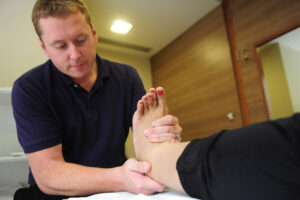
FMT™ restores joint glides where restriction is present, not globally, but specifically and in sequence. This means the body is given back access to range in a way that the nervous system can track and begin to manage. For Vikram, this meant addressing the thoracic spine and lead hip first, with the lumbar spine supported throughout, so that rotation arrived where it should rather than defaulting to where it was compensating.
The role of CoreFirst®
CoreFirst® is the framework through which neuromuscular control is retrained. Once mobility is restored, CoreFirst® teaches the deep stabilising muscles to engage before movement begins and to sustain that engagement as range, load, and speed increase.
For a golfer, this means the lumbar spine is protected by an active system, not just passive tissue, through every phase of the swing. The rotation that used to arrive uncontrolled at the lower back is now transferred through a system that can manage it. Performance and safety improve together.
For anyone else, the principle is the same. More range is only an asset when the system knows what to do with it.
Fast reference: what you feel, what it often means, first focus
| What you experience | What it often means | Initial focus at VARDĀN |
|---|---|---|
| Back pain persists despite better hip and thoracic mobility | Lumbar spine bearing load that adjacent joints are not controlling | Assess control deficits before adding more mobility work |
| Flexibility has improved but injury rate has not changed | Mobility restored without neuromuscular control retrained | FMT™ to sequence mobility correctly, then CoreFirst® retraining |
| Pain appears specifically under load or speed but not in slow practice | Control deficit revealed by demand, not present at rest | Retrain stability into the range under progressive loading |
| One side moves freely but feels unreliable | Asymmetric control pattern alongside similar range of motion | Assess and address the control deficit specifically on that side |
| Fatigue changes how a movement feels significantly | Stabilising system unable to sustain control as load accumulates | CoreFirst® endurance work alongside movement retraining |
Two adjustments you can start today
- Add a stability demand after every mobility drill After any hip or thoracic mobility exercise, immediately follow it with a loaded movement in that same range. A hip rotation stretch followed by a single leg step down, for example. This begins to train the nervous system to manage the range you have just accessed rather than leaving it unsupported.
- Slow down before you speed up. If a movement is only controlled at slow speed, it is not yet controlled. Before adding pace or load to any movement pattern, confirm that you can perform it slowly with consistent alignment and no compensations. Speed and load should come after control is established, not before.
What progress looks like in two weeks
Days 1 to 4 FMT™ assessment to identify which restrictions are genuine and which are compensatory. Restore mobility in the correct sequence. Begin CoreFirst® breath and alignment strategies in the positions most relevant to the person’s activity.
Days 5 to 10 Begin neuromuscular retraining into the restored range. Loaded and rotational patterns with attention to stabiliser engagement and consistent alignment. Progress slowly and track how the body responds.
Days 11 to 14 Add speed and complexity to patterns that are now controlled. Introduce sport specific demands where relevant. Monitor whether symptoms remain stable as demand increases.
Book an assessment at VARDĀN
If your mobility work is not reducing your injury rate, or if pain keeps returning despite genuine improvements in flexibility, the issue is most likely neuromuscular control, not range of motion.
A comprehensive assessment at VARDĀN will identify where mobility and control are mismatched, which restrictions need to be addressed first, and what the correct sequence of retraining looks like for your body and your activity.
Request an appointment for a Functional Manual Therapy® session or a CoreFirst® Movement Assessment at VARDĀN, Lajpat Nagar, New Delhi.
Call us today at +91 011 43580720-22 / 9810306730
📅 Book your root-cause consultation at www.vardan.in
📍 Visit our advanced physiotherapy clinic in Delhi in Lajpat Nagar