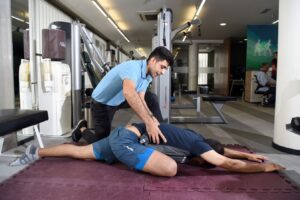
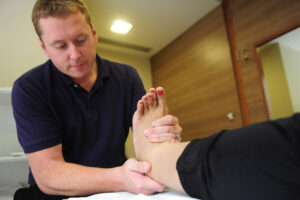
Understanding the Foundation of Efficient Movement
Pain, stiffness, and recurring injuries rarely occur without reason.
Whether it is a persistent neck ache after long workdays, recurring lower back discomfort, or a knee that feels unreliable during activity, symptoms are often the result of how the body manages movement and load over time.
While many people focus on treating the area that hurts, lasting improvement requires a deeper understanding of the movement strategies driving the problem.
This is where a structured movement assessment becomes valuable.
At VARDĀN, assessment is not viewed as a routine checklist. It is a systematic process designed to identify movement inefficiencies, compensatory patterns, and the underlying factors contributing to recurring symptoms or performance limitations.
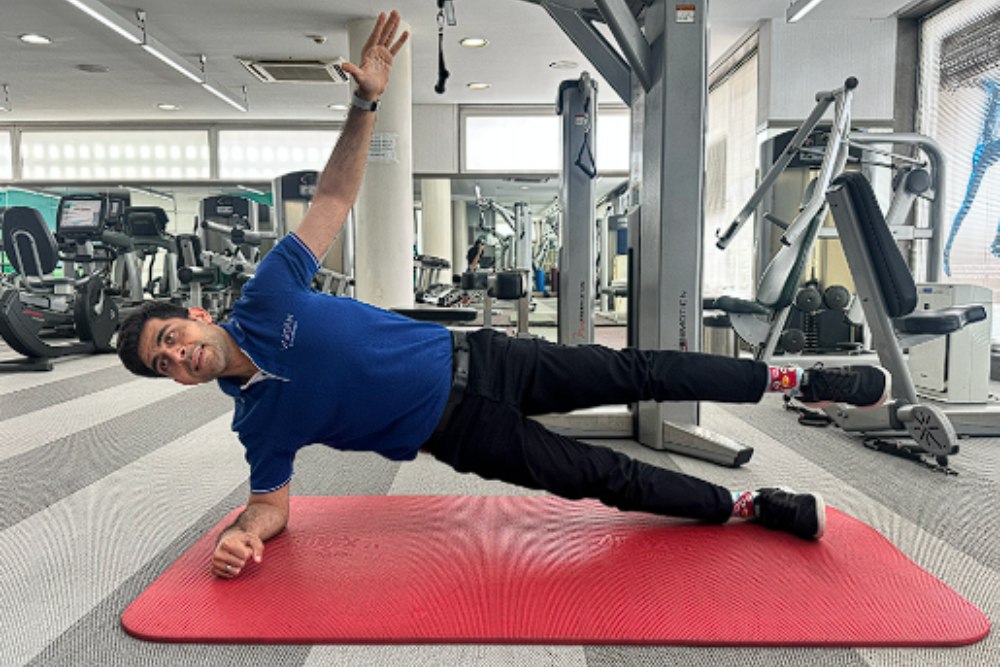
Why Movement Assessment Matters
Symptoms provide information, but they rarely tell the entire story.
A painful shoulder may be influenced by reduced thoracic mobility. Persistent knee discomfort may reflect altered hip mechanics. Lower back fatigue may develop because the body is relying on inefficient stability strategies during movement.
Without understanding how these systems interact, treatment often becomes focused on symptom management rather than long-term resolution.
A structured movement assessment helps answer three essential questions:
- Where is movement restricted?
- How is the body compensating?
- What should be addressed first to improve efficiency and reduce overload?
These answers create direction, allowing rehabilitation and performance training to become more precise and effective.
Looking Beyond Symptoms
The human body functions as an integrated system.
When one region loses mobility, stability, or control, another area often compensates to maintain function. Initially, these adaptations may go unnoticed. Over time, however, they can increase mechanical stress and contribute to recurring symptoms.
For this reason, an effective assessment extends beyond the painful area and examines how the entire system manages movement.
At VARDĀN, key areas of evaluation include:
Joint Mobility
The ability of joints to move efficiently through their available range without restriction.
Movement Control
The body’s ability to create stability before movement and load are introduced.
Coordination
How effectively multiple regions work together to share force and distribute load.
Endurance
The ability to maintain movement quality as physical demands increase.
Repeatability
Whether movement patterns remain consistent across multiple repetitions and varying levels of fatigue.
These components provide valuable insight into why symptoms develop and why they often return.
Recognising Early Signs of Compensation
- Recurrent symptoms during familiar activities
- One side of the body feeling less reliable than the other
- Difficulty maintaining balance despite adequate strength
- Excessive fatigue in the neck, shoulders, or lower back
- Inconsistent performance during routine movement tasks
- Reduced confidence during exercise or sport
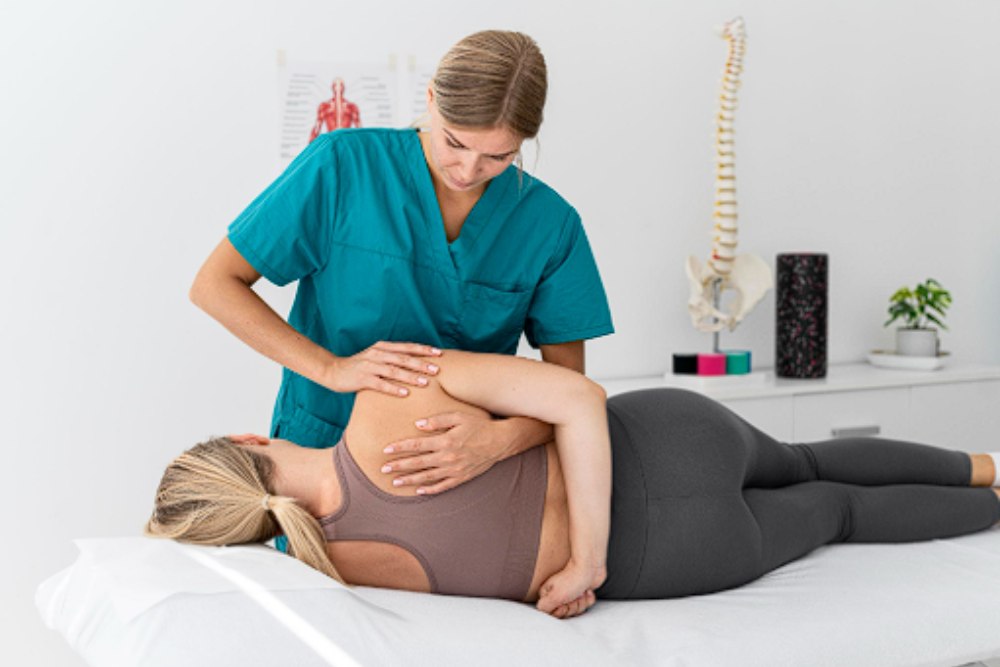
The VARDĀN Assessment Philosophy
At VARDĀN, movement assessment is guided by a simple principle:
Identify the driver, not just the symptom.
Our assessment process evaluates how the body responds to movement, load, and fatigue through:
- Postural organisation and breathing mechanics
- Mobility throughout the spine, rib cage, pelvis, hips, and lower limbs
- Foundational movement patterns including squatting, hinging, lunging, and rotation
- Single-leg loading strategies and balance control
- Stability throughout functional ranges of motion
- Changes in movement quality under repetition and fatigue
What Restoring Function Requires
Once the underlying movement pattern has been identified, correction follows a structured progression.
Restore Mobility
Restricted joints often force the body to seek movement elsewhere, creating inefficient loading patterns. Restoring mobility helps re-establish normal movement options.
Rebuild Control and Coordination
Efficient movement depends on the body’s ability to organise stability before movement occurs. This stage focuses on improving timing, coordination, and neuromuscular control.
Develop Strength on a Stable Foundation
Strength is most effective when it is built on efficient movement mechanics. A stable foundation allows strength gains to transfer more effectively into daily life, sport, and performance.
FMT™ also addresses the soft tissue changes that accumulate with long-standing FHP, shortened suboccipital muscles, restricted fascia, and ligament stiffness, without which postural retraining remains superficial.
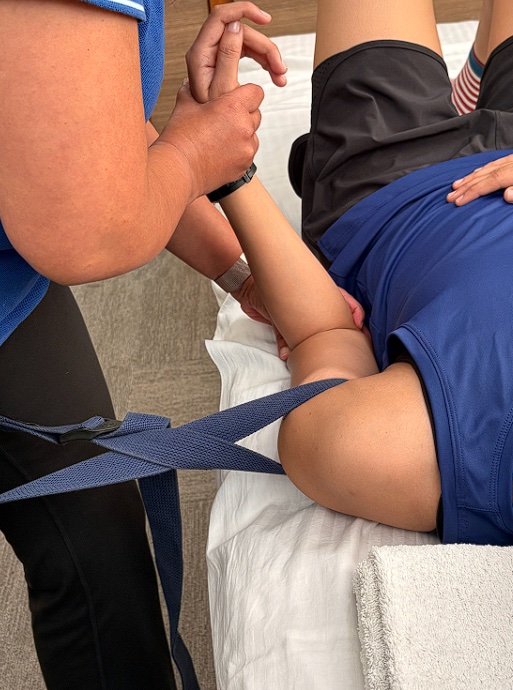
The Role of FUNCTIONAL MANUAL THERAPY® (FMT™)
FUNCTIONAL MANUAL THERAPY® plays an important role in restoring mobility and improving movement quality.
By addressing restrictions within joints, soft tissues, and movement systems, FMT™ helps create the conditions necessary for efficient movement to occur.
Equally important, it assists in identifying which restrictions are contributing to compensation and where intervention is likely to have the greatest impact.
FMT™ also addresses the soft tissue changes that accumulate with long-standing FHP, shortened suboccipital muscles, restricted fascia, and ligament stiffness, without which postural retraining remains superficial.
The role of CoreFirst®
CoreFirst® focuses on how the body organises stability through posture, breathing mechanics, and alignment.
Rather than relying on conscious bracing, the objective is to develop efficient and automatic support strategies that allow movement to occur with greater control and less unnecessary effort.
When breathing, alignment, and stability work together effectively, movement becomes more efficient and sustainable.
For people who sit at a desk for extended periods, this transition from effortful correction to automatic alignment is what makes the difference between short term relief and sustained change.
A More Effective Way Forward
Many people attempt to solve movement problems by doing more.
More stretching.
More strengthening.
More exercise.
The challenge is that effort alone does not correct inefficient movement patterns.
A structured movement assessment provides clarity by identifying where movement is restricted, where compensation exists, and what sequence of intervention is most appropriate.
This transforms rehabilitation from trial-and-error into a focused process guided by objective findings.
Conclusion
Movement quality influences how the body performs, adapts, and recovers.
Understanding how mobility, stability, coordination, and load management interact provides valuable insight into recurring pain, movement limitations, and performance challenges.
At VARDĀN, a structured movement assessment serves as the foundation for identifying dysfunction, restoring efficiency, and building long-term physical resilience.
Book an assessment at VARDĀN
Discover how your body manages movement, where compensation may be occurring, and what strategy can help restore efficient function.
Correct. Restore. Perform.
Call us today at +91 011 43580720-22 / 9810306730
📅 Book your root-cause consultation at www.vardan.in
📍 Visit our advanced physiotherapy clinic in Delhi in Lajpat Nagar