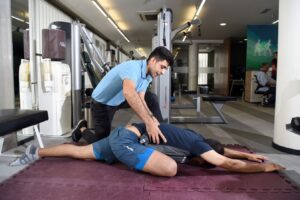
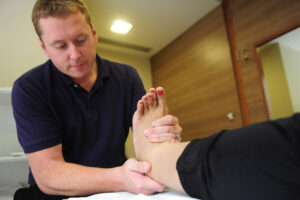
A clinical movement perspective
Most people begin their recovery journey focused on one goal:
reducing pain.
Pain relief restores comfort, improves daily function, and allows movement again.
But once symptoms reduce, a more important phase begins.
- Why did it start
- Why did it return
- What needs to change so the body performs better than before
This is where the real shift happens.
At VARDĀN, the focus moves from symptom relief to system correction.
From short-term comfort to long-term function, capacity, and performance.
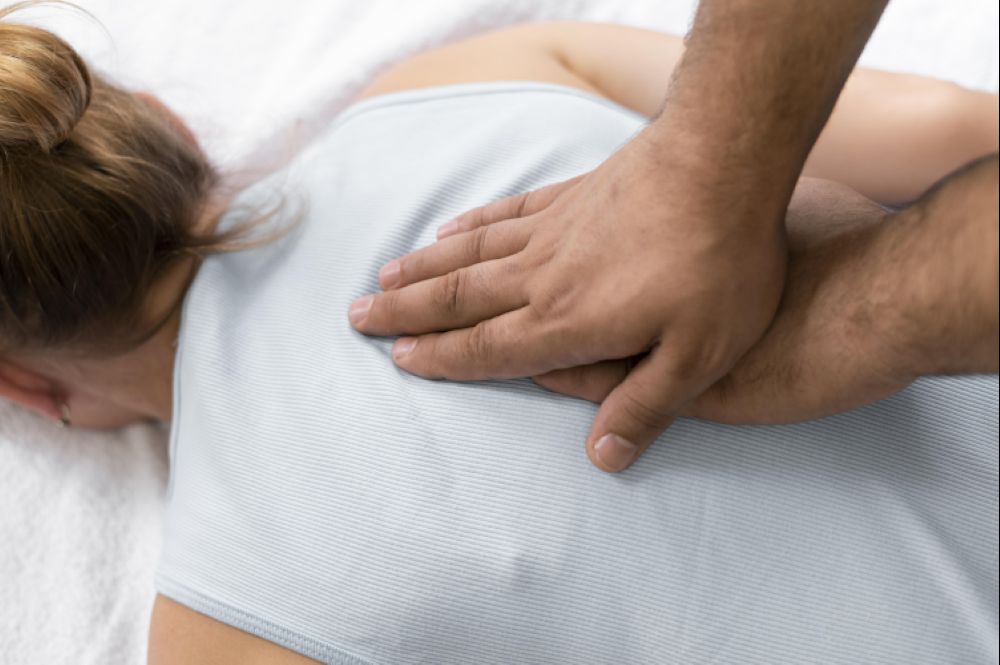
Understanding Performance Optimization In Daily Function
Performance is not limited to athletic activity.
It reflects how efficiently the body functions across daily tasks and physical demands.
Performance optimization involves:
- Joint mobility that remains available during movement
- Postural alignment that is maintained under fatigue
- Strength that transfers into functional tasks
- Efficient mechanics during everyday activities
- Movement patterns that are consistent and repeatable
Two individuals may follow the same exercise program, yet experience different outcomes.
One demonstrates control and efficiency.The other continues to rely on compensation. The difference lies in movement quality and system coordination
Why Progress May Still Despite Consistent Effort
A common challenge in rehabilitation is plateau.
In many cases, effort increases, but the underlying movement pattern remains unchanged.
Stretching and strengthening can be effective, but only when applied in the correct sequence.
- If mobility is limited, strength cannot be expressed effectively
- If control is insufficient, the body compensates through tension
- If strength is developed on poor mechanics, it does not transfer into function
Sustainable progress requires a structured progression:
Mobility → Control → Strength
Without this sequence, improvements are often temporary and inconsistent.
Identifying The Transition From Recovery To Performance
There is often a phase where pain has reduced, but movement has not fully normalized. Common indicators include:
- Movement feels guarded despite reduced pain
- Strength is present, but stability is lacking
- One side avoids load unconsciously
- Tightness returns after prolonged activity
- Performance declines under fatigue
- Confidence in movement remains limited
These are not random. They are load signals.
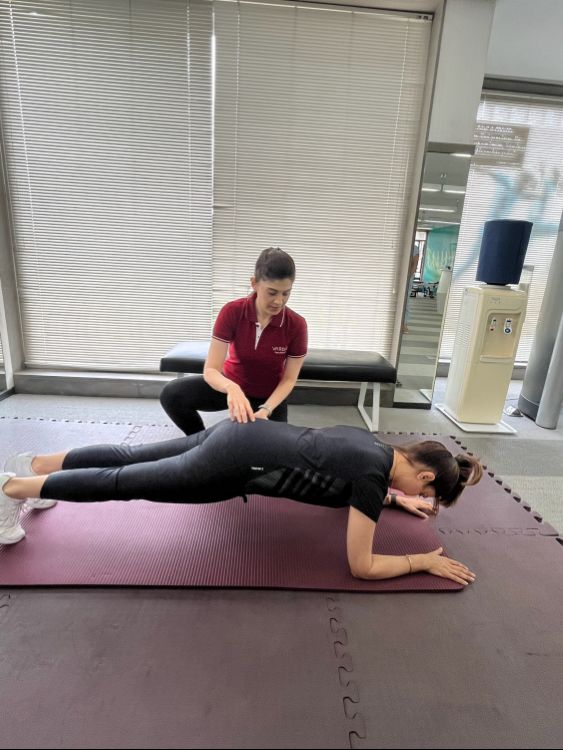
The VARDĀN Approach to Movement Assessment
At VARDĀN, the focus extends beyond the site of discomfort.
We assess the system that contributes to the dysfunction.
Our evaluation includes:
- Posture and breathing mechanics
- Joint mobility and movement quality across key regions
- Fundamental movement patterns such as hinging, squatting, lunging, and rotation
- Single-leg loading and balance strategies
- Control across functional ranges of motion
- Movement response under repetition, speed, and fatigue
This structured approach allows us to:
- Identify the root cause of dysfunction
- Prioritize correction effectively
- Develop a precise and individualized progression plan
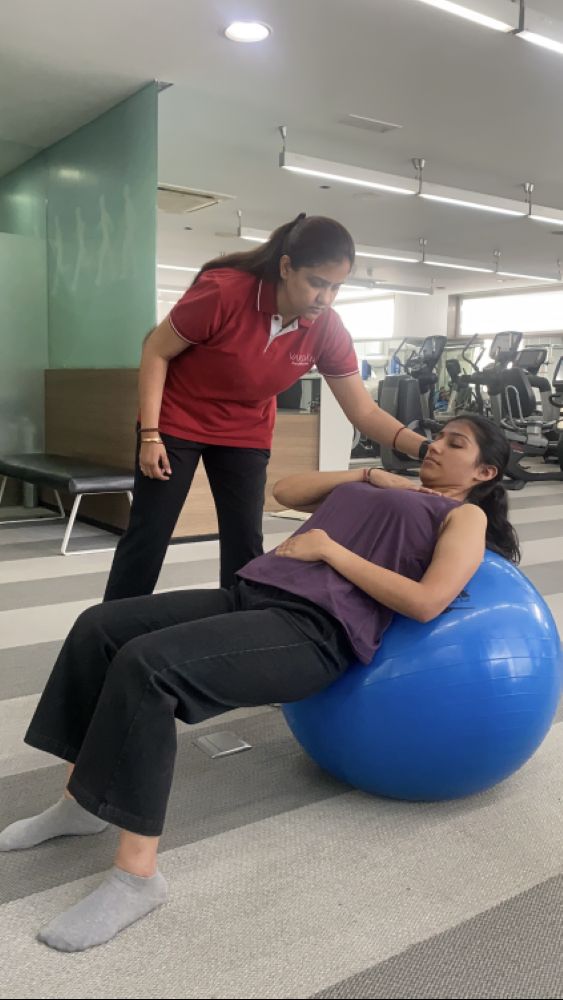
Building A System That Supports Long-Term Performance
The goal of rehabilitation is not only to reduce pain.
It is to build a system that can sustain performance over time. This involves:
- Restoring mobility where restrictions exist
- Developing control within functional ranges
- Building strength that integrates into real movement
- Improving coordination across the kinetic chain
- Enhancing resilience under physical and daily demands
When these elements are addressed systematically, the body becomes more efficient, adaptable, and reliable.
What you feel & what it often means?
| What you experience | What it often means | Initial focus at VARDĀN |
|---|---|---|
| Pain is reduced but stiffness returns | Pattern still compensates under daily stress | Restore mobility and retrain posture strategies |
| You feel strong but unstable | Timing and coordination gaps | Rebuild control and alignment under load |
| One side dominates | Asymmetry in mechanics | Restore symmetry and single leg control |
| Performance drops late in sessions | Control fades under fatigue | Build endurance for posture and movement patterns |
| You avoid certain ranges | The system does not trust those positions | Reintroduce range gradually with control |
The role of CoreFirst®
Once mobility improves, the body needs a new strategy.
CoreFirst® emphasises posture, alignment, and coordinated movement so stability
arrives earlier. This reduces bracing and improves movement patterns that carry into
daily life and sport.
This is where performance becomes repeatable.
Live Efficient: the outcome of the shift
Pain relief is a start. Performance optimization is the goal. A comprehensive
assessment at VARDĀN helps identify the root cause pattern, restore mobility,
retrain posture and control, and build movement strategies that hold up. Live Efficient.
Call us today at +91 011 43580720-22 / 9810306730
📅 Book your root-cause consultation at www.vardan.in
📍 Visit our advanced physiotherapy clinic in Delhi in Lajpat Nagar
Ready to move pain-free? Book your personalized consultation with VARDĀN today!
Frequently Asked Questions
No. It applies to anyone who wants better movement, fewer flare ups, and a body
that holds up through routine life.
Because the goal is not only symptom relief. The goal is preventing recurrence by
changing the movement pattern.
If tightness keeps returning, one side feels dominant, or fatigue changes your
mechanics, compensation is likely part of the picture.