A clinical movement perspective
When performance drops before pain appears
Most sports injuries do not begin with a single bad moment. Performance usually changes first.
- You feel it as small signs
- Sprint speed drops in the last 15 minutes
- The landing feels heavier than usual
- Direction change feels slower on one side
- The shoulder feels tight after sessions, not during them
- Recovery takes longer than it used to
Then pain appears. And the common conclusion is, “Something suddenly went wrong.”
In reality, the system often ran out of capacity. The body was managing training stress with compensation, until it could not.
That is why sports injuries often reflect load management failures. Not just training volume, but how load is absorbed, shared, and recovered from.
What “load management” actually means
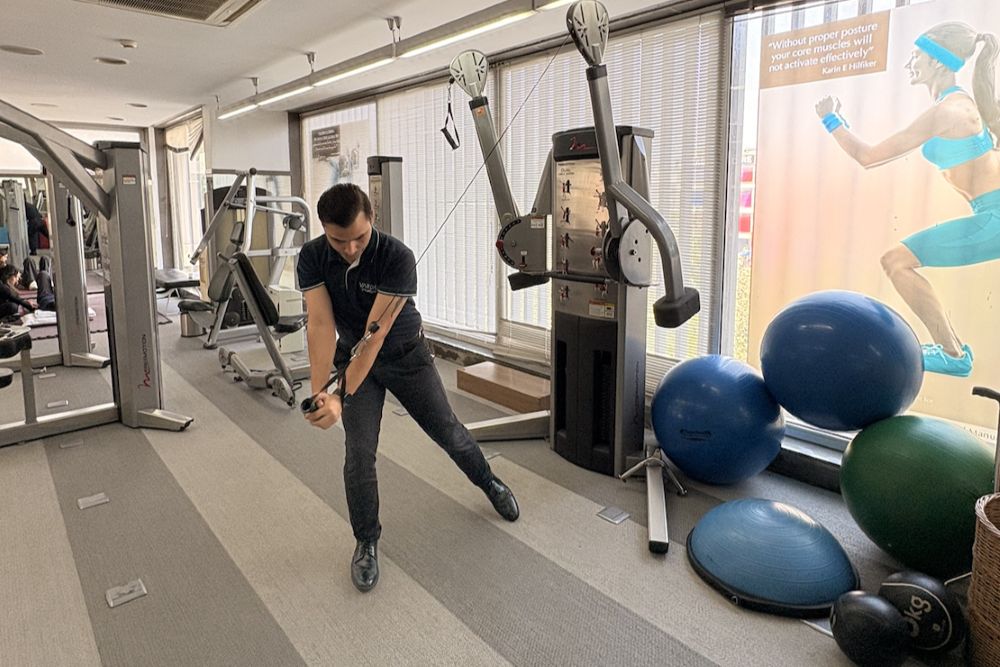
Load management is not only about doing less. It is about matching training demand to your current capacity.
Capacity is influenced by
- Joint mobility and tissue readiness
- Movement patterns and body mechanics
- Timing and coordination under speed
- Strength in usable ranges
- Recovery and sleep consistency
- Recent changes in training, surfaces, or schedule
When demand rises faster than capacity, the body finds a workaround. That workaround becomes overload.
Why “more training” can increase injury risk
Many athletes are disciplined. They do not skip sessions. They add extra conditioning. They push through discomfort.That mindset builds fitness. But it can also mask early warning signs. When control drops under fatigue, form changes.
When form changes, stress shifts. When stress shifts repeatedly, tissue irritation builds.
This is why injuries often show up after a period of improved training, not after a period of inactivity.
Common load management mistakes that trigger breakdown
These patterns are seen across sports.
- Sudden increases in intensity, volume, or frequency
- Adding speed work on top of fatigue
- Changing surfaces, shoes, or equipment without transition time
- Returning to full play without rebuilding range and control
- Ignoring small recurring tightness because it “warms up”
- Training strength but skipping deceleration and landing control
The result is usually the same. The body compensates until the weakest link complains.
Early indicators your load is outpacing capacity
Look for these signs before the injury lands.
- Pain appears after training, not during
- Tightness keeps returning in the same muscle
- One side feels less stable or less powerful
- You need longer warm ups to feel normal
- Posture collapses late in sessions
- Speed and coordination drop under fatigue
- Symptoms return in cycles
These are not random. They are load signals.
The VARDĀN assessment approach
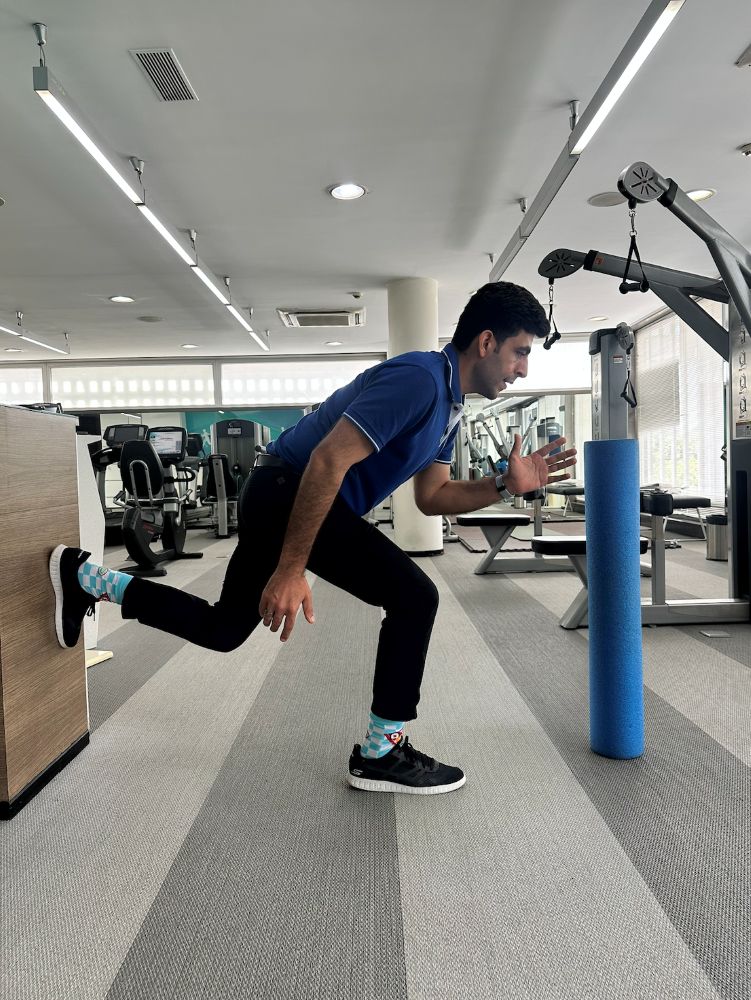
At VARDĀN, the focus is to understand what your body is doing under demand. A comprehensive assessment evaluates
- Posture and breathing mechanics
- Joint mobility and glide
- Foundational movement patterns such as hinging, squatting, lunging, and rotation
- Single leg loading, impact absorption, and deceleration control
- Control through usable range, not only end range
- What changes when speed and fatigue increase
This helps identify what is restricting your capacity and where compensation is building.

Fast Reference: Symptoms, Meaning, Initial Focus
| What you experience | What it often means | Initial focus at VARDĀN |
|---|---|---|
| Tightness that appears after sessions | Tissue is absorbing stress due to compensation | Restore mobility and correct the driver pattern |
| One side feels slower or less stable | Asymmetry in control or load sharing | Rebuild symmetry through targeted movement retraining |
| Pain returns after rest periods | The pattern returns when training resumes | Retrain mechanics and progression strategy |
| Discomfort during direction change | Deceleration and single leg control deficit | Improve deceleration mechanics and control |
| “Warm up” pain that comes back later | Capacity is not matching demand | Rebuild usable range and endurance for control |
The role of FUNCTIONAL MANUAL THERAPY®
When joint mobility is restricted, the body compensates. Compensation changes how stress travels through the system.
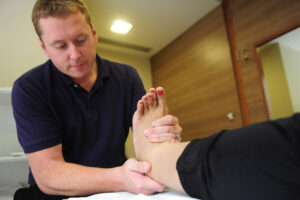
FUNCTIONAL MANUAL THERAPY® helps restore joint mobility and soft tissue glide so movement options return.
FMT™ helps map where the movement strategy is breaking down and what is driving overload.
This is often where true capacity increases begin.
The role of CoreFirst®
Once mobility is available, control must be rebuilt so it holds under fatigue.
CoreFirst® focuses on posture, alignment, and coordinated movement. It helps stability arrive earlier, so you do not rely on bracing or inefficient strategies when sessions get hard.
This is how performance becomes repeatable.
Two practical changes that reduce breakdown risk
These steps support better load management without overcomplicating training.
- Progress with checkpoints, not guesses Increase training only when movement quality stays consistent across sessions, not just when motivation is high.
- Train deceleration, not only acceleration Sport is about stopping, landing, and changing direction. If you skip this, tissues pay the price when fatigue rises.
What progress can look like in two weeks
- Days 1 to 4 - Clarify the driver pattern. Restore key mobility with FUNCTIONAL MANUAL THERAPY®. Establish CoreFirst® strategies for control.
- Days 5 to 10 - Rebuild strength in usable range. Add single leg stability, landing, and deceleration patterns.
- Days 11 to 14 - Progress sport exposure with controlled speed and complexity. Track response and adjust early.
Build capacity that holds up
If performance is dropping, tightness keeps returning, or injuries repeat, a comprehensive assessment at VARDĀN can identify the root cause pattern, restore mobility, and retrain control so your training stays consistent and resilient.
Call us today at +91 011 43580720-22 / 9810306730
📅 Book your root-cause consultation at www.vardan.in
📍 Visit our advanced physiotherapy clinic in Delhi in Lajpat Nagar
Ready to move pain-free? Book your personalized consultation with VARDĀN today!
Frequently Asked Questions
No. It is about aligning demand to capacity and progressing steadily.
Because volume may rise while control drops under fatigue, shifting stress to a weak link.
Not always. Training is adjusted so you rebuild capacity while staying active.