What the research has been saying for a while
This is not a new idea. Research on spinal stability has been building since the early 1980s. What is new is how often it is still overlooked in training and rehabilitation programmes.
A case that explains it clearly
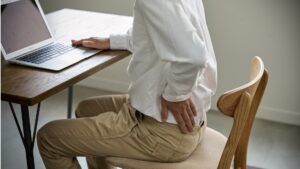
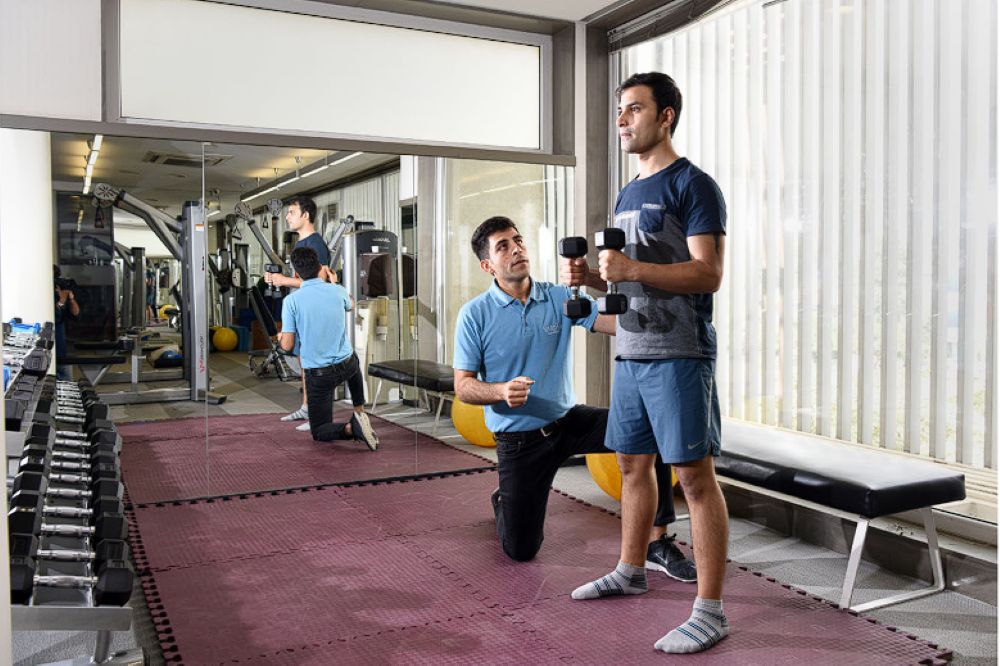
Priya, 31, had been training consistently for two years. Strong lifts, regular gym sessions, no obvious injuries. She came to VARDĀN with a nagging lower back that would flare up after heavier training days. She had tried to rest. She had tried more core work including planks, crunches, dead bugs. The pain kept returning.
The assessment told a different story. Priya’s core muscles were working. But they were working late. Her trunk was not setting before movement. It was reacting after. The load was going to her lumbar spine instead of being shared across the system. That is a stability problem, not a strength problem.
More core exercises were not the answer. Understanding the difference was.
What is the difference
Core strength is the capacity of the muscles around your spine, pelvis, and hips to produce force. Think of how much load you can move, how long you can hold a position, how much you can resist against resistance.
Core stability is the ability of your neuromuscular system to control the spine and pelvis automatically, at the right moment, in response to movement and load. It is about timing, not force.
Here is the distinction that matters in practice. Stability must arrive before movement begins. Strength shows up during or after. If the timing is off, the spine takes load it was not designed to manage alone.
Research published in ScienceDirect notes that only a low level of muscle activation, even as little as 1 to 3 percent of maximum voluntary contraction, is needed to stabilize the spine during normal daily movement. The issue is never how much strength you have. It is whether the right muscles switch on at the right time.
Why this matters in daily life and sport
The core is not just an abdominal group. It includes the transversus abdominis, multifidus, diaphragm, pelvic floor, gluteals, and the deep hip muscles. Together they act as a coordinated system — a muscular corset that protects the spine, transfers force between the upper and lower body, and maintains postural control through everything from picking up a bag to changing direction at speed.
When this system works well, movement feels efficient. When timing breaks down, the body compensates. Load shifts. Joints take more than their share. Pain, fatigue, or injury follow often in places that seem unrelated to the core itself.
This is why someone with a strong gym record can still develop knee pain on the stairs, shoulder issues during overhead work, or recurring back pain after loading sessions. The strength is there. The coordination is not.
Early signs the problem is stability, not strength
- Your back aches after sessions even though you are lifting well
- One side feels reliable; the other feels unpredictable
- Balance tasks or single leg work feel shaky despite good leg strength
- You feel fatigue in your lower back before your legs during activities like running or hiking
- Pain or discomfort returns whenever you increase load or pace
- Certain positions feel fine; small changes to that position create symptoms
What restoring stability actually requires
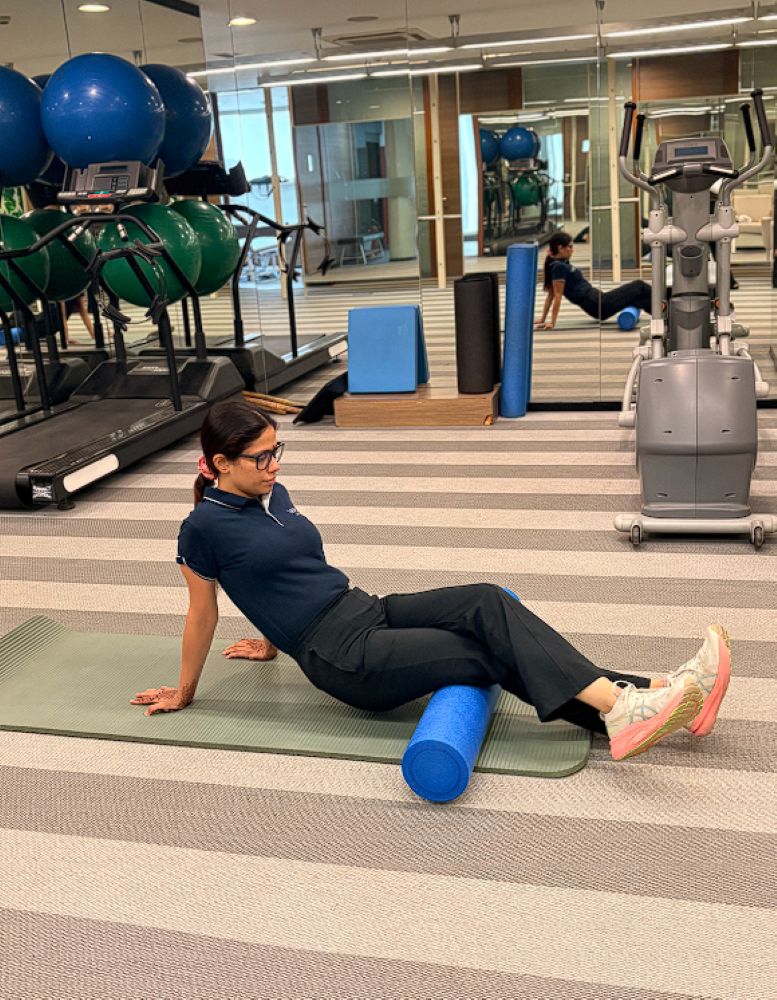
- Restore mobility first If joints in the spine, hips, or ribcage are not moving freely, the body will compensate with adjacent segments. Restricted mobility forces the nervous system to work around the problem rather than through it.
- Retrain timing and coordination The deep stabilising muscles need to learn to engage automatically, before movement begins and before external load arrives. This is a neuromuscular task. It requires specific input, not more sets and reps.
- Build strength in positions that are already stable Once control is present, adding load makes sense. Strength built on an unstable base reinforces the wrong patterns. Strength built on a stable one transfers.
The role of FUNCTIONAL MANUAL THERAPY®
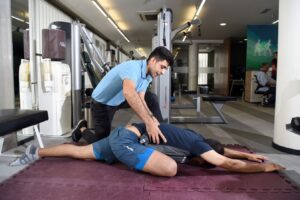
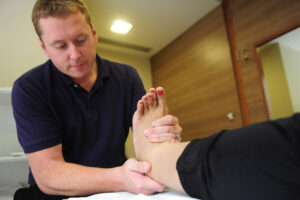
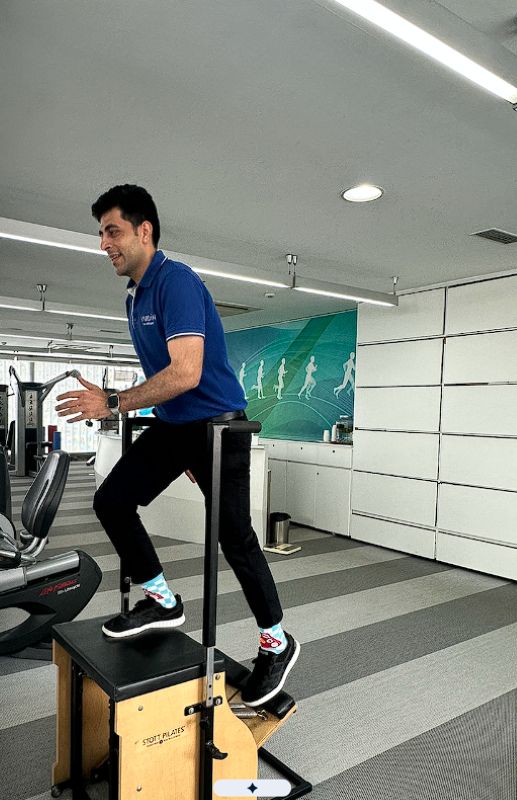
When mobility restrictions are present, they limit what the nervous system can do. FUNCTIONAL MANUAL THERAPY® (FMT™) works to restore joint glide and soft tissue movement across the spine, pelvis, hips, and ribcage. This gives the neuromuscular system more to work with.
FMT™ also helps map exactly where timing is breaking down, which restrictions are driving the compensation pattern and where control is genuinely absent. Without this clarity, training often reinforces the same problem it is trying to fix.
The role of CoreFirst®
CoreFirst® is the approach VARDĀN uses to retrain how the body initiates and organises movement. Rather than teaching you to consciously squeeze your core before every movement, CoreFirst® works through posture, breathing mechanics, and alignment to create Automatic Core Engagement.
Ribs over pelvis. Breath setting the pressure system. Stability arriving before movement begins.
This is what changes how loading feels. Not just in the gym. In everything, even when sitting at a desk for hours, carrying weight, playing sport, recovering between sessions.
Fast reference: what you feel, what it often means, first focus
| What you experience | What it often means | Initial focus at VARDĀN |
|---|---|---|
| Lower back aches after training despite strong lifts | Stability arriving late, trunk not setting before load | Restore mobility, retrain CoreFirst® timing |
| Balance tasks feel unreliable despite leg strength | Coordination deficit in single leg and pelvic control | Rebuild single leg stability with correct trunk strategy |
| One side feels predictable, the other does not | Asymmetric motor control pattern | Assess and address the side-to-side timing difference |
| Pain returns every time you increase load | Capacity built on compensated pattern | Clear the restriction first, then rebuild with FMT™ |
| Fatigue in lower back before legs during running | Core endurance and timing under sustained load | Progressive stability training with load monitoring |
Two adjustments you can apply today
- Slow the transition, not just the movement Most stability errors happen at the moment of transition — from standing to squatting, from static to dynamic, from slow to fast. Slow that transition. Hold the start position for two counts before you move. This trains the system to set before loading begins.
- Train breathing as part of every exercise The diaphragm is a primary stabiliser of the spine. If your breath holds during effort or collapses at the top of a movement, stability is being borrowed from somewhere else. Exhale on exertion. Inhale on return. Keep that pattern consistent even as load increases.
Two adjustments you can apply today
- Days 1 to 4 : FMT™ to restore mobility restrictions in the spine, ribcage, and hips. Introduce CoreFirst® breath and alignment strategies in basic positions like sitting, standing, hinging.
- Days 5 to 10 : Begin single leg and loaded patterns with the CoreFirst® strategy active. Focus on clean transition and consistent breath. Keep intensity easy and repetitions controlled.
- Days 11 to 14 : Begin adding load and complexity. Track next-day response carefully. If symptoms stay calm and form holds, progress continues. If symptoms return, the foundation needs more time.
Book an assessment at VARDĀN
If your training has plateaued, your back keeps returning to the same pattern, or your movement feels inconsistent despite consistent effort, the issue is likely stability and timing, not more strength.
A comprehensive assessment at VARDĀN will identify where mobility is restricted, where timing is breaking down, and what the correct sequence of restoration looks like for your body.
Request an appointment for a Functional Manual Therapy® session or a CoreFirst® Movement Assessment at VARDĀN, Lajpat Nagar, New Delhi.
Call us today at +91 011 43580720-22 / 9810306730
📅 Book your root-cause consultation at www.vardan.in
📍 Visit our advanced physiotherapy clinic in Delhi in Lajpat Nagar