Did You know?
- 60–80% of adults experience low back pain at some point.
- Among people with persistent spine or shoulder pain, over 50% show inefficient chest-dominant breathing.
- In movement screens, 30–40% of active adults struggle to activate the diaphragm during basic tasks like sit-to-stand or reach.
When breathing is shallow and high, the trunk braces late, small muscles overwork, and joints feel “heavy.” When the diaphragm leads, stability arrives before motion. That is the CoreFirst® idea in action.
Why breathing is the foundation of stability
Diaphragmatic breathing is more than “taking deep breaths.” The diaphragm, pelvic floor, deep abdominals, and spinal muscles work as a team. When the diaphragm descends on inhale, pressure spreads evenly through the abdomen, creating a gentle, automatic brace. That brace lets hips and shoulders move without asking the low back or neck to grip. The result is smoother motion, fewer flare ups, and a calmer nervous system.
When breathing goes wrong, you see

- Rib cage lifting and flaring instead of expanding low and wide
- Tight neck and upper chest doing the “breathing” work
- Delayed trunk set before lifting, stepping, or reaching
- Fatigue and tension that build across the day
What diaphragmatic breathing changes (that you feel right away)
- Earlier stability: ribs align over pelvis, so the trunk supports every step, lift, and reach.
- Less guarding: neck and low back stop bracing for every movement.
- Calmer pain response: a steadier breath down-regulates sensitivity, so irritation settles faster.
- Better carryover: strength work “sticks” because the base is consistent.
How we train it at VARDĀN

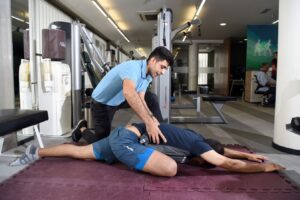
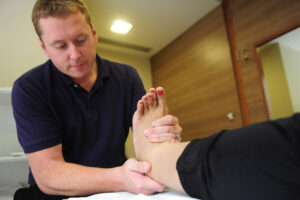
- Restore glide: Hands-on work frees the rib cage, diaphragm attachments, thoracic spine, and hips so the system can expand and recoil without drag.
- Recode control We teach low-rib, 360-degree breathing and simple alignment cues that place ribs over pelvis. You learn to set, then move.
- Reload the pattern Clinical Pilates and task-specific drills reinforce the new breath-plus-movement sequence so it shows up in real life.
- Prove it in what you do We link the skill to your priorities: desk work, childcare, lifting, running, tennis, golf, or swimming.
Quick map: problem → sign → fix
| What you notice | Likely pattern | First focus at VARDĀN |
|---|---|---|
| Neck tight by mid-day | Upper chest breathing and rib flare | Mobilise ribs, cue low-rib breath, often upper-trap drive |
| Back aches after sits or stands | Late trunk set before movement | Ribs-over-pelvis alignment, breath-to-move sequence |
| Shoulder pinch overhead | Stiff ribs and scapula, chest-dominant breath | Thoracic glide, scapular rhythm, diaphragm-led inhale |
| “Core work” makes pain worse | Bracing from belly or back, not breath | Gentle pressure-based bracing, then progressive loading |
| Runs feel heavy, hard to “find” rhythm | Shallow breathing, extended trunk | Low-rib breath, quiet trunk, relaxed arm swing |
Everyday and sport examples
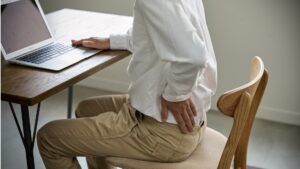
- Desk and travel Low-rib breathing plus ribs-over-pelvis alignment turns long meetings into steady, supported sitting. You feel less neck and mid-back tension and stand up without a stab of stiffness.
- Lifting and daily tasks Set breath first, then hinge, then lift. The brace is light and even, so you do not need to “grip your back” to move weight.
- Running and walking A quiet trunk with diaphragmatic breathing reduces bounce and side-to-side drift. Steps feel lighter and rhythm holds longer.
- Tennis, golf, swimming Breath sets the trunk, the trunk guides the shoulder and hips. Strokes and swings feel smoother, and the effort shifts from small overworked muscles to the whole chain
Two-week reset you can follow
- Gentle rib and thoracic mobility, then low-rib 360 breathing in crook-lying and sitting
- Short sets before key tasks: sit-to-stand, reach, and light carries

Days 4–7: Make it automatic
- Add breath-to-move to your warm-up: set, then hinge or squat to a chair
- Keep effort low, watch the next-day response, extend only if calm
Days 8–14: Build capacity
- Layer light resistance: supported squat and hinge, banded pulls, step-ups
- Keep breath even under effort; if it drifts to the chest, regress and rebuild
Why choose VARDĀN for breath-led rehab
- Functional Manual Therapy® to free the exact bottlenecks that limit your stride.
- CoreFirst® strategies so stability arrives before motion
- Clinical Pilates to turn the pattern into durable strength
- Sports Injury Rehabilitation and post-surgery programs that use breath as the base for faster, steadier progress
Move with ease. Set the breath. Let the body follow.
Request an Appointment for a CoreFirst® Movement Assessment or Functional Manual Therapy® session at VARDĀN, Lajpat Nagar, New Delhi.
Call us today at +91 011 43580720-22 / 9810306730
📅 Book your root-cause consultation at www.vardan.in
📍 Visit our advanced physiotherapy clinic in Delhi in Lajpat Nagar
Frequently Asked Questions
Your lower ribs expand sideways and back on inhale, your neck stays quiet, and your belly rises without pushing the ribs forward. You should feel a light, even brace before you move.
Many people feel immediate ease in the neck or low back when they switch to low-rib breathing. Pain control improves further as mobility returns and you practise the set-then-move sequence in daily tasks.
Yes. With CoreFirst® you build strength on top of a light pressure brace. You will feel stable without gripping, which protects sensitive joints and makes strength gains carry into real life.
No. Breath-led stability improves control for shoulders, hips, and the neck. It is also a powerful base for running, golf, tennis, and swimming, and it accelerates recovery after surgery.