A case you will recognise
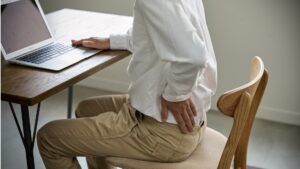
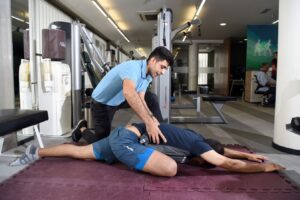
Rohan, 32, lifted four days a week. His numbers went up, but his shoulder and lower back kept flaring. Deload weeks and pain killers gave short relief. In his first assessment session at VARDĀN we found the root cause. His joints were not gliding well and his trunk was not setting before he pressed or pulled. Functional Manual Therapy® freed his shoulder blade and rib cage, then CoreFirst™ cues aligned ribs over pelvis. We reduced his working range for two weeks, added controlled lowering and steady tempo, and built single leg and hinge control. His shoulder soreness faded, his back stayed calm, and within a month he was lifting better loads with a cleaner bar path and no next day payback.
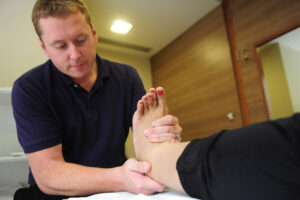
At VARDĀN we do not only chase the sore spot. Using Functional Manual Therapy® (FMT™), we restore joint motion, set control with CoreFirst™, and then build strength that shows up in real life and in the gym.

Why strength without stability keeps hurting
- Late trunk set When stability does not arrive before the lift, small muscles grip and big movers fight a shaky base. The result is pinch at the shoulder, strain at the elbow, or a tight lower back after sessions.
- Missing glide Stiff segments in the shoulder blade, ribs, hips, ankle, or wrist block smooth motion. Force detours into sensitive tissues and the lift feels heavy and awkward.
- End range chasing Depth without control looks like progress but adds stress to tendons, capsules, and discs. Numbers may move, pain returns.
- Load spikes Sudden jumps in volume or intensity outpace tissue capacity. Pain settles on rest days, then comes back when you push again.
Fast map: sign → likely driver → first step
| Your sign in training | Likely driver | First step at VARDĀN |
|---|---|---|
| Front shoulder ache on bench or dips | Poor scapular glide and rib position | FMT™ to ribs and scapula, press in a range you can control |
| Elbow pain with pressing or pulling | Wrist and forearm tight, grip strategy off | FMT™ to wrist and forearm, build slow lowering for tendon load |
| Lower back tight after deadlifts | Late trunk set and missing hip hinge | CoreFirst™ set, groove hinge, try trap bar while control returns |
| Knee discomfort in squats | Ankle stiffness and knee drift | FMT™ to ankle, teach knee over mid foot, use tempo squats |
Muscle, joint, or nerve in the gym
- Muscle feels like a dull ache or tight band that warms up with gentle sets. Help now: short isometrics, light tempo work, and steady breath.
- Joint feels like a deep pinch or blocked end range with clicks or catches. Help now: restore glide with FMT™, keep to small arcs you can own, do not force depth.
- Nerve related feels sharp or electric and may travel into the limb with tingling or numbness. Help now: neutral spine and neck positions, brief comfortable nerve glide only, no long hold stretches that trigger symptoms.
Strength that actually transfers
- Restore mobility with FMT™ Free joint and soft tissue glide in the areas that block your patterns. Shoulder blade and rib for pressing. Hip and ankle for squat and hinge. Wrist and forearm for pull and carry.
- Re code control with CoreFirst™ Set ribs over pelvis. Breathe low and wide. Move from a quiet trunk so force flows through the chain rather than into the back or neck.
- Reload with intent Build in the ranges you can control. Start with isometrics, then controlled tempo, then power. Use steady eccentrics to raise tendon capacity without spiking pain.
- Prove it in the lift Clean bar path, even foot pressure, quiet neck, and repeatable depth. Small stance changes and neutral grips often help while control returns
Quick table: common lifts, frequent faults, simple fixes
| Lift | Frequent fault | Simple fix |
|---|---|---|
| Back squat | Ankles stiff and knees drift inward | Heel wedge or ankle work, knees track over mid foot, tempo descent |
| Deadlift | Back extends as you start the bar | Hinge first, lats long, bar close, try trap bar or rack height |
| Bench press | Shoulders pinch at the bottom | Soft chest lift, ribs settled, neutral or slight incline, pause press |
| Overhead press | Low ribs flare and neck tightens | Exhale to set ribs, press in a range you can own, landmine or half kneeling while thoracic motion improves |
| Pull ups | Elbows or forearms flare after sets | Neutral or ring grip, controlled lowering, forearm loading between days |
Two simple wins this week
- Set before the rep Exhale to settle ribs. Breathe into lower ribs. Then press, pull, squat, or hinge. Most people feel an immediate difference.
- Own the lowering Smooth three to five second lowers calm joints and build tendon capacity without losing the training effect.
Two simple wins this week
- Days 1 to 4 FMT™ to restore glide in the exact segments that block your main lifts. Learn CoreFirst™ set for bench, squat, hinge, and press. Train in pain free ranges.
- Days 5 to 10 Add isometric holds and tempo work at moderate effort. Short skill blocks for bar path, stance, and grip. Keep volume steady.
- Days 11 to 14 Nudge volume or load in small steps. Check next day response. If calm, continue to build. If symptoms rise, adjust range or tempo and retest

What makes VARDĀN different for lifters
- FUNCTIONAL MANUAL THERAPY® to free the exact bottlenecks that stop clean patterns
- CoreFirst™ to make stability arrive before motion so strength feels available, not forced
- Sports Injury Rehabilitation mapped to your program and targets
- One to one care in Lajpat Nagar, New Delhi, with a movement first plan
Call us today at +91 011 43580720-22 / 9810306730
📅 Book your root-cause consultation at www.vardan.in
📍 Visit our advanced physiotherapy clinic in Delhi in Lajpat Nagar